Spicy Baked Chicken Wings
I usually season my wings with salt, pepper, and some other seasonings I have in the pantry. I think I used a bit too much salt, so I'm adjusting the salt amount in the recipe. Feel free to skip the brining solution, but I like it. I've noticed that to get the chicken pieces well browned, you must not overcrowd them.
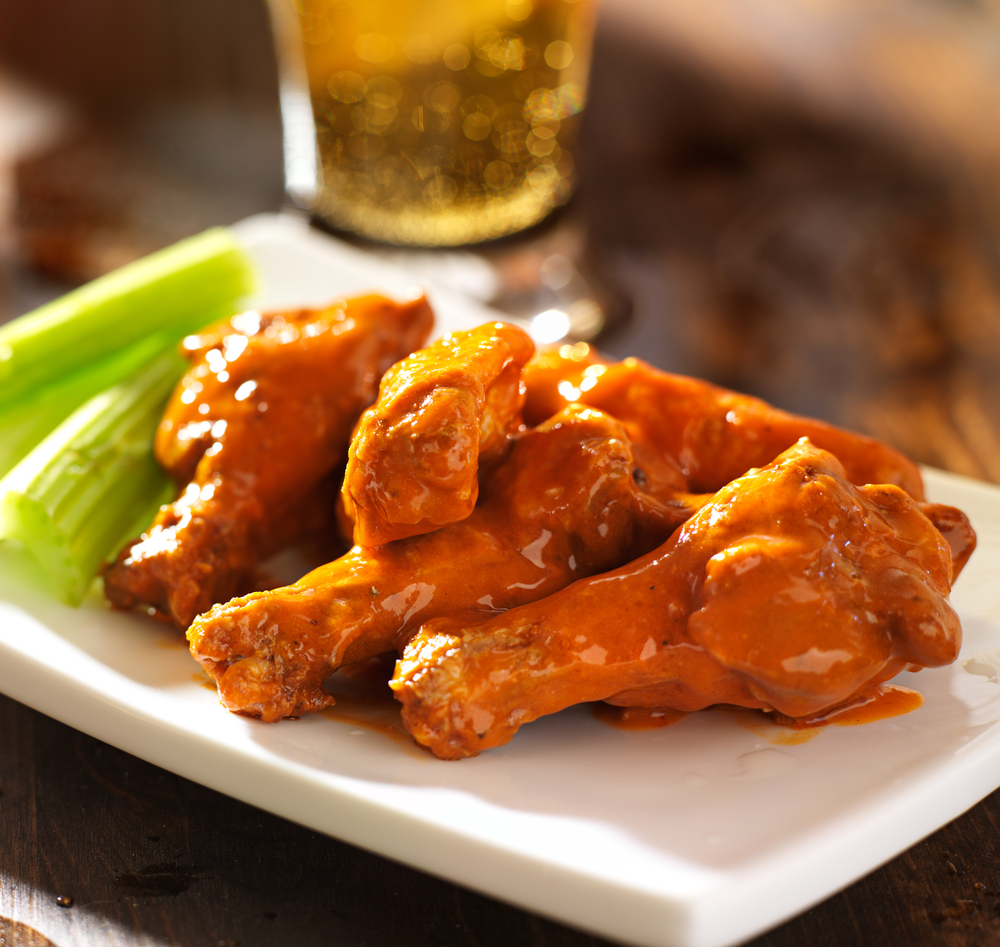
I usually season my wings with salt, pepper, and some other seasonings I have in the pantry. I think I used a bit too much salt, so I'm adjusting the salt amount in the recipe. Feel free to skip the brining solution, but I like it. I've noticed that to get the chicken pieces well browned, you must not overcrowd them.
- brine:
- marinade:
- 25 chicken wings
- 6 cups water (up to 8 cups)
- 3 tablespoons kosher salt (up to 4 tablespoons)
- 1 tablespoons onion powder
- 1/2 cup cilantro loosely packed
- 4 tablespoons oil
- 3 cloves garlic crushed
- spicy sauce:
- 1 cup frank's hot sauce
- 1/2 stick butter melted (optional)
- sides:
- celery
- bleu cheese dressing
- Carbohydrate 1.97763593752302 g
- Cholesterol 35.74375 mg
- Fat 41.701097398529 g
- Fiber 0.26225781608163 g
- Protein 5.50874515625289 g
- Saturated Fat 6.94262183169169 g
- Serving Size 1 1 Serving (106g)
- Sodium 2307.31480276006 mg
- Sugar 1.71537812144139 g
- Trans Fat 2.08678151803533 g
- Calories 399 calories
Step-by-step
- In a large bowl make brine by mixing all ingredients together until salt dissolves. Set aside.
- Wash and clean wings...cut off small wing tips if needed.
- Place in a large bowl.
- Pour brine over the wings making sure that they all fully immersed in liquid.
- Cover.
- Refrigerate for a few hours or overnight.
- I left mine overnight.
- Drain.
- Pat dry.
- Make marinade by placing all the ingredients in a food processor.
- Apply the marinade all over the wings.
- Take out a jelly roll pan and place a piece of parchment paper.
- Lay chicken wings being careful not to overcrowd.
- You want them to brown evenly and not boil and steam.
- If need be use 2 pans.
- Place in a preheated 425 deg oven and bake for about 30 minutes.
- Turn once and bake for an additional 15 minutes or until nicely crisp and browned.
- Just check them.
- Place the hot wings in a large bowl and pour the hot sauce over them.
- You can add some melted butter to the hot sauce if you like.
- But, I didn't.
- Mix to fully glaze each piece.
- Serve with celery sticks and blue cheese dressing and plenty of napkins.
Chicken wing recipes typically omit the underlying chemistry that separates crisp skin from rubbery fat. A lengthy brine alters muscle protein structures, allowing moisture retention during high-heat cooking while seasoning the meat throughout. Without this preliminary step, prolonged oven exposure dries out the exterior before the interior renders properly.
Dryness is the primary enemy of browning. Moisture on the skin surface vaporizes at 212 degrees Fahrenheit, converting the oven environment into a steamer that prevents the necessary Maillard reaction. Thoroughly patting the wings dry after draining removes surface water. Arranging the pieces in a single layer with distinct gaps ensures hot air circulates freely around every surface. Overcrowding traps steam, halting crisping entirely. Utilizing two separate jelly roll pans solves this problem immediately.
Baking at 425 degrees Fahrenheit for approximately 45 minutes provides sufficient thermal energy to render subcutaneous fat and crisp the skin without frying. Turning the pieces halfway through ensures uniform heat distribution across both sides. Combining aged cayenne pepper sauce with melted butter creates a classic emulsion that clings to the textured skin. Adjusting the butter-to-sauce ratio alters heat intensity and cling viscosity based on preference.



