Fruit Water
Fruit water is made with fresh fruit, that juice adds an extra flavor of fruit to water which make it more useful, and fresh. This allows the fruit to interact with water and infuse flavor into it.
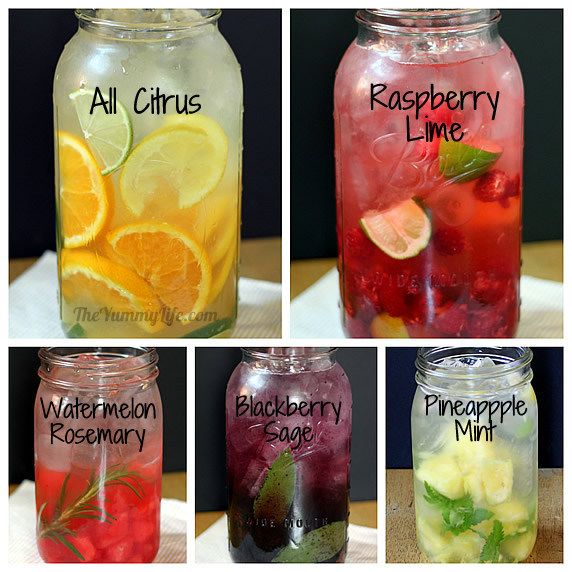
Fruit water is made with fresh fruit, that juice adds an extra flavor of fruit to water which make it more useful, and fresh. This allows the fruit to interact with water and infuse flavor into it.
- Carbohydrate 13.5688 g
- Cholesterol 0 mg
- Fat 0.1008 g
- Fiber 1.06399998664856 g
- Protein 0.7952 g
- Saturated Fat 0.014 g
- Serving Size 1 1 Serving (56g)
- Sodium 1.68 mg
- Sugar 12.5048000133514 g
- Trans Fat 0.02408 g
- Calories 55 calories
Step-by-step
- All Citrus Flavored Water (adds refreshing tartness to water) -- slice 1 orange, 1 lime, 1 lemon into rounds, then cut the rounds in half. Add to jar, press and twist with a muddler or the handle of a wooden spoon. Press enough to release some of the juices, but don't pulverize the fruit into pieces. Fill the jar with ice. Pour in water to the top. Stir it with the handle of a wooden spoon or a chopstick. Put a lid on it, put it in the fridge, and chill.
- Raspberry Lime Flavored Water (beautiful color and mildly tart) -- Quarter 2 limes; with your hands, squeeze the juice into the jar, then throw in the squeezed lime quarters. Add raspberries. Press and twist with a muddler to release some of the juices (don't pulverize the fruit). Fill the jar with ice, then add water to the top. Stir, cover, and refrigerate.
- Pineapple Mint Flavored Water (a hint of minty sweetness). Add a sprig of mint to the jar--you can throw in the whole sprig; or, remove the leaves from the sprig, if you prefer to have the mint swimming around and distributing in the jar. Muddle the mint--the goal is to bruise the leaves and release their flavor--don't pulverize them into bits. Add pineapple pieces, press and twist with the muddler to release juices. Add ice to the top and then water. Stir, cover, and refrigerate.
- Blackberry Sage Flavored Water (subtle, refreshing flavor). Add sage leaves to jar and bruise with a muddler. Add blackberries; press and twist with muddler to release their juices. Fill jar with ice cubes, add water to the top, stir, cover and refrigerate.
Citrus fruits and aromatic herbs dictate the success of flavored waters by supplying essential oils and organic acids. Whole, un-punctured cell walls prevent water from accessing internal fruit sugars and volatile compounds. Mechanical disruption breaks those cellular barriers, allowing water-soluble compounds to dissolve into the surrounding liquid.
Muddling requires precision. Pressing too hard pulverizes fruit flesh and herb leaves into suspended particles that cloud the liquid and clog straws. Pressing too softly leaves cells intact, yielding flat water that tastes merely of ice. Bruise mint leaves and sage gently until aromatic oils release, and press citrus rounds just until juices escape without shredding the pith, which introduces bitter secondary metabolites.
Temperature controls extraction rates. Chilling the mixture in the refrigerator between 34°F and 38°F slows cellular breakdown while maximizing flavor transfer over a four-hour steeping window. Beyond twenty-four hours, delicate components degrade and citrus pith can overpower the infusion. Strain out solids if storing past that threshold.
Dietary adjustments require no modification to the core technique. The preparation is naturally vegan, gluten-free, and free from all major allergens.


