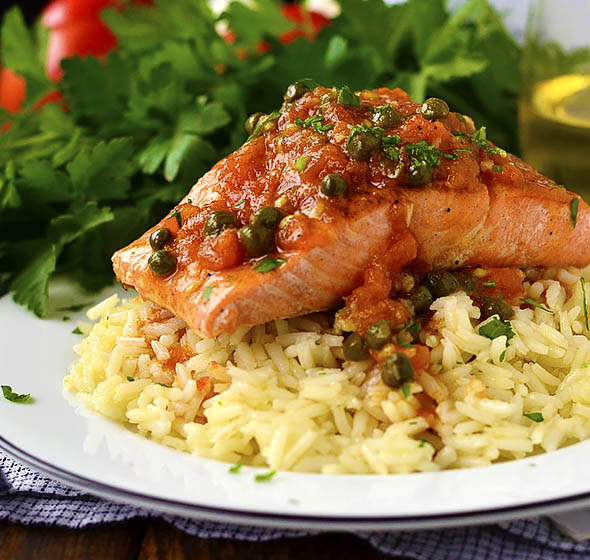
Try this Salmon Provençal recipe, or contribute your own.
- Carbohydrate 2.005825 g
- Cholesterol 115 mg
- Fat 26.332 g
- Fiber 0.109999997839332 g
- Protein 28.75545 g
- Saturated Fat 7.05664466666667 g
- Serving Size 1 1 Serving (171g)
- Sodium 144.865619791667 mg
- Sugar 1.89582500216067 g
- Trans Fat 2.05452966666667 g
- Calories 366 calories
Step-by-step
- Bring a small pot of water to a boil.
- Score an “X” on the bottom of the tomato then add to the pot and remove once the skin begins to peel back, 30 seconds.
- Once cool enough to handle, peel the skin off the tomato and discard, then finely chop the tomato and add everything (flesh, seeds, and juices) to a bowl.
- Measure out 1/2 cup of the tomato and juices then set aside.
- Heat a generous drizzle of extra virgin olive oil in a large skillet over heat that’s just a touch above medium.
- Season salmon filets generously with salt and pepper then place skin side up in the skillet and saute for 2 minutes.
- Flip then saute for 3-4 minutes, or until salmon is cooked through.
- Transfer filets to a plate then let skillet sit off the heat for a minute to cool down slightly.
- Add garlic to skillet then stir constantly until golden brown, 30 seconds, then add wine, chicken broth, tomatoes, and capers.
- Turn heat up to bring to a boil then turn back down and simmer until liquid has reduced by half, 2-3 minutes.
- Squeeze in a bit of fresh lemon juice (you can always add more,), then add butter and swirl until melted.
- Taste then add salt and pepper if necessary.
- Plate salmon then top with sauce and serve.
The Tomato Threshold
Scoring a vine-ripened tomato and blanching it for precisely thirty seconds loosens the skin without cooking the interior flesh, yielding a bright pulp that canned alternatives simply cannot match. When fresh tomatoes peak in price or quality during off-seasons, substitute canned crushed tomatoes at a one-to-one ratio while omitting the chicken broth to maintain the necessary structural integrity of the reduction. This method prevents watery pooling in the pan and keeps ingredient costs controlled without sacrificing the characteristic acidity required to balance rich proteins.Garlic Management
Garlic minced to a uniform thickness burns in under forty-five seconds when introduced to residual skillet heat above medium, creating an acrid foundation that ruins white wine reductions. Removing the pan from the burner for sixty seconds allows the temperature to drop below the smoke point of extra virgin olive oil before aromatics enter the hot metal. Swirling cold butter into the reduced broth, capers, and lemon juice creates an emulsified gloss that binds the sharp briny elements together.Preserved Elements
Capers packed in salt require a brief rinse under cold running water to eliminate surface sodium before they hit the pan, whereas jarred capers packed in brine can go straight into the reduction without altering the overall seasoning balance. Leftover portions store safely in an airtight container in the refrigerator for up to forty-eight hours, though gently reheating the fish requires a low-heat skillet method with an added splash of water to prevent the delicate proteins from drying out.


