Incredibly Moist and Easy Carrot Cake Recipe
This cake is incredibly moist and light. It is up to you when it comes to the grated carrots. You can hand grate for the finest carrot pieces that sort of melt into the cake batter. A food processor makes quick work of grating carrots, but the pieces will be slightly larger. This is what we do and find it works really well in the cake. A third option is to use pre-grated carrots from the store. They work very well and help with prep time. This cake is very forgiving. You can make this with or without nuts and raisins. We like using both granulated and brown sugar in this — you could just use granulated sugar, though.
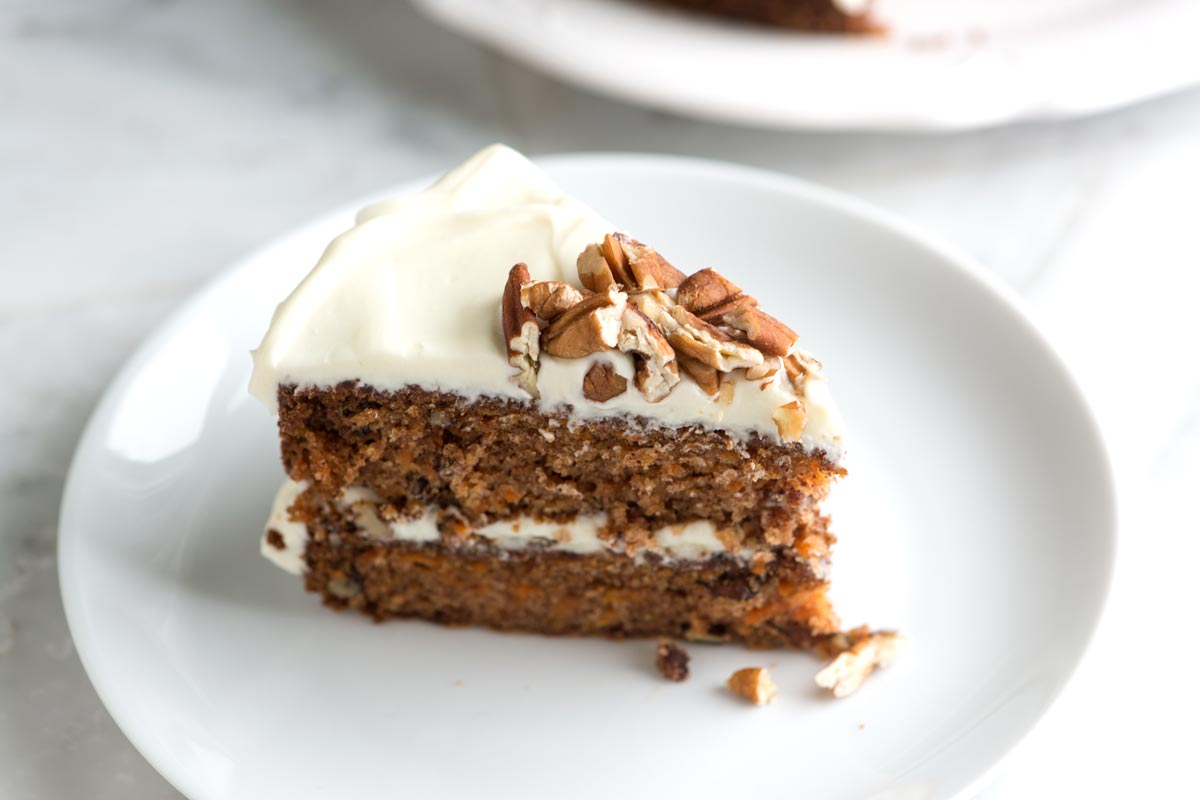
This cake is incredibly moist and light. It is up to you when it comes to the grated carrots. You can hand grate for the finest carrot pieces that sort of melt into the cake batter. A food processor makes quick work of grating carrots, but the pieces will be slightly larger. This is what we do and find it works really well in the cake. A third option is to use pre-grated carrots from the store. They work very well and help with prep time. This cake is very forgiving. You can make this with or without nuts and raisins. We like using both granulated and brown sugar in this — you could just use granulated sugar, though.
- 1 teaspoon vanilla extract
- 2 teaspoons baking soda
- 1 teaspoon kosher salt
- 1 1/2 teaspoons ground cinnamon
- 4 large eggs
- 2 cups (260 grams) all-purpose flour
- 1 cup (200 grams) granulated sugar
- 1 cup (200 grams) lightly packed brown sugar
- 1 1/4 cups (295 ml) canola or other vegetable oil
- 3 cups (300 grams) grated peeled carrots (5 to 6 medium
- 1 cup (100 grams) coarsely chopped pecans
- 1/2 cup (65 grams) raisins
- 8 ounces (225 grams) cream cheese at room temperature
- 1 1/4 cups (140 grams) powdered sugar
- 1/3 cup (80 ml) heavy cream
- 1/2 cup (50 grams) coarsely chopped pecans for topping cake
- Carbohydrate 7.02671 g
- Cholesterol 2668.1 mg
- Fat 408.05028 g
- Fiber 2.07089994049072 g
- Protein 54.33713 g
- Saturated Fat 245.620595 g
- Serving Size 1 1 Serving (1092g)
- Sodium 4385.0576 mg
- Sugar 4.95581005950928 g
- Trans Fat 32.470291 g
- Calories 3849 calories
Step-by-step
- Heat the oven to 350º F. Grease two 9-inch round cake pans and line the bottom with parchment paper then grease the top of the paper. Or, grease and flour the bottom and sides of both pans.
- In a medium bowl, whisk flour, baking soda, salt, and the cinnamon until well blended. In a separate bowl, whisk the oil, sugars and vanilla. Whisk in eggs, one at a time, until blended.
- Switch to a large rubber spatula. Scrape the sides and bottom of the bowl then add the dry ingredients in 3 parts, stirring gently until they disappear and the batter is smooth. Stir in the carrots, nuts and raisins.
- Divide the batter between the prepared cake pans. Bake until the tops of the cake layers are springy when touched and when a toothpick inserted into the center of the cake comes out clean; 35 to 45 minutes.
- Cool cakes in pans for 15 minutes then turn out onto cooling racks, peel off parchment paper and cool completely.
- In a large bowl, beat cream cheese with a handheld mixer on medium speed until creamy, about 1 minute. Beat in the powdered sugar, a 1/4 cup at a time until fluffy. Pour in cream and beat on medium speed for 1 minute. Chill covered until ready to frost cake.
- When the cake layers are completely cool, frost the top of one cake layer, place the other cake layer on top. Decoratively swirl the top of the cake with remaining frosting, leaving the sides unfrosted. Scatter nuts on top.
Standard butter cakes rely on creaming solid fat to trap air, but this formula utilizes oil for a heavy, dense crumb that retains moisture over several days. Whisking the oil, sugars, and eggs together thoroughly creates an emulsion that suspends the grated carrots and heavy mix-ins without sinking. When incorporating the dry ingredients, fold gently with a rubber spatula to avoid developing excess gluten from the all-purpose flour. Overmixing yields a rubbery texture rather than a tender one. Determining doneness without a thermometer requires observing physical indicators. Press the center of the baking layer lightly with a fingertip; the sponge should spring back immediately rather than leaving an indentation. Alternatively, insert a wooden toothpick into the middle of the pan. It should emerge clean or with a few moist crumbs attached, but no wet batter. Cool the layers for precisely 15 minutes in their pans before inverting them onto wire racks, preventing the crumb from breaking apart while still hot. Scaling this batter for different pan sizes requires proportional adjustments to baking times rather than temperatures, keeping the oven at 350 degrees Fahrenheit. Beat the cream cheese and heavy cream until light and fluffy for the topping, ensuring the components are fully chilled before spreading over completely cooled cake layers.


