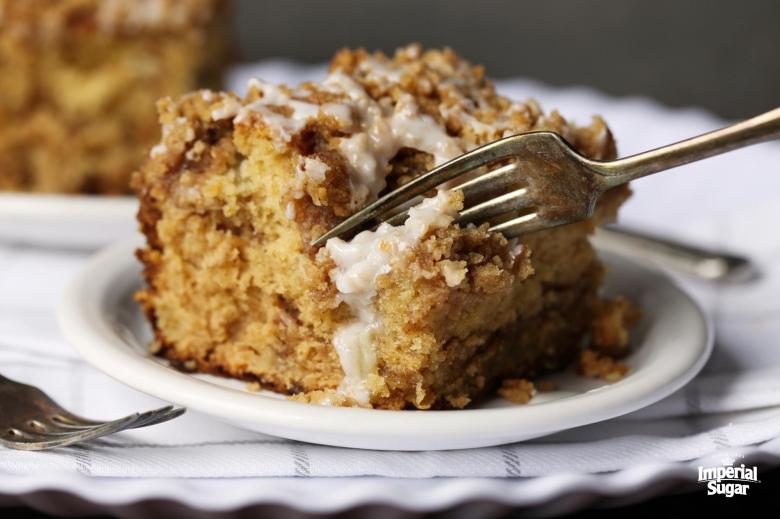
Try this Sour Cream Apple Cake recipe, or contribute your own.
- Carbohydrate 0 g
- Cholesterol 0 mg
- Fat 0 g
- Fiber 0 g
- Protein 0 g
- Saturated Fat 0 g
- Serving Size 1 1 Serving (0g)
- Sodium 0 mg
- Sugar 0 g
- Trans Fat 0 g
- Calories 0 calories
Step-by-step
- Preheat oven to 350°F. Coat a 9x13-inch baking dish with nonstick spray and set aside.
- For crumb topping, use a medium bowl and combine butter, brown sugar, salt, cinnamon and flour. Using your hands or a pastry cutter combine ingredients until they resemble coarse sand and hold together when squeezed. Set aside.
- For cinnamon swirl, use a small bowl and combine sugar and cinnamon. Set aside.
- For cake, in the bowl of your stand mixer fitted with the paddle attachment combine butter and sugar, mixing on medium speed for 2 minutes.
- Add in vanilla and eggs mixing until smooth, scraping sides of bowl as necessary.
- Add in sour cream, salt, baking soda, and baking powder, and continue mixing on medium speed for 30 seconds, until mixture is combined.
- Turn mixer to low and add in flour, mixing until just incorporated.
- Stir in apples.
- Spread half of batter into prepared pan. Sprinkle batter with half of cinnamon swirl mixture. Using a knife swirl mixture into batter.
- Repeat again with remaining batter and remaining cinnamon sugar.
- Sprinkle crumb topping onto cake.
- Bake for 60 minutes, or until a toothpick inserted into center comes out clean.
- Allow cake to cool in pan until ready to serve, or enjoy warm.
Bakers frequently ruin apple-laden cakes by underestimating the moisture content of the fruit, resulting in a soggy interior that refuses to set. Slices of fresh fruit release water during baking, which alters the density of the batter if the flour ratio is not properly calibrated. Adding dense ingredients like sour cream requires exact chemical leavening reactions to lift the heavy crumb without collapsing the structure.
Creaming room temperature butter with sugar on medium speed for two minutes incorporates tiny air cells that expand under heat. Turn the stand mixer down to low speed the moment the all-purpose flour enters the bowl. Over-mixing activates gluten proteins, transforming a tender pastry into a tough, chewy loaf.
Testing doneness relies on a wooden toothpick inserted directly into the center of the 9x13-inch pan. Pull the pan from the 350°F oven the exact second that toothpick emerges clean without wet batter clinging to the wood. Relying solely on a strict timer fails because oven thermostats fluctuate and fruit moisture varies between batches.
Letting the dessert cool entirely in the pan allows the internal starches to firm up properly before slicing. Wrapped tightly in plastic wrap, leftovers maintain peak moisture for up to three days at room temperature.


