Skewered Honey-Balsamic Chicken
Grilled chicken skewers marinated in a flavorful honey-balsamic sauce
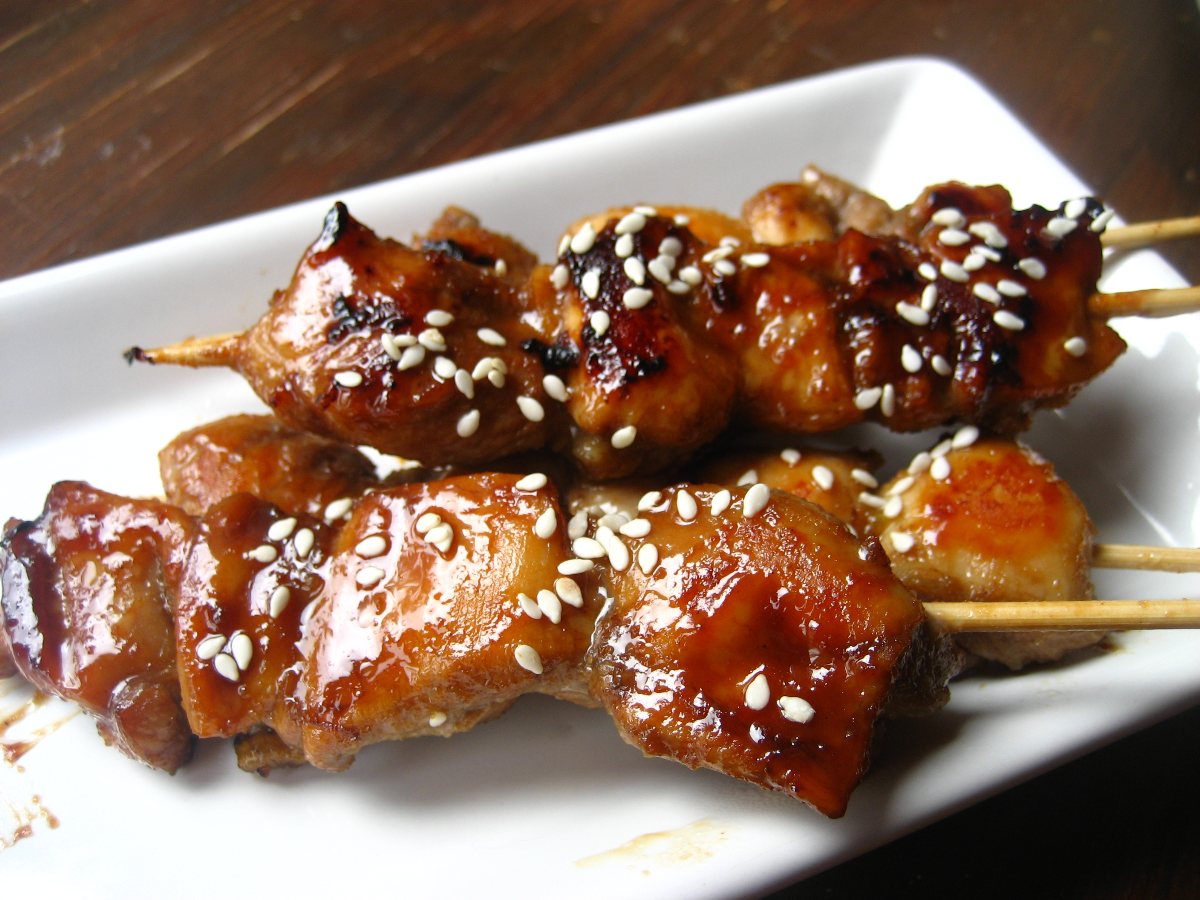
Grilled chicken skewers marinated in a flavorful honey-balsamic sauce
- salt to taste
- 5 chicken thighs skinless, boneless
- marinade:
- 2 tbs balsamic vinegar
- 2 tbs worcestershire sauce
- 2 tsp onion powder
- 2 tbs honey
- 1 tsp pepper
- 2 cloves garlic crushed
- 1 tsp ginger grated
- 1 tbs oil
- sesame seeds for sprinkling on top
- honey extra, (optional)
- extra optional ingredients
- broccoli
- sugar snap peas
- rice
- Carbohydrate 57.5396010437778 g
- Cholesterol 39.9 mg
- Fat 16.7502085118493 g
- Fiber 1.81806628130895 g
- Protein 13.7637062308265 g
- Saturated Fat 2.79776521465042 g
- Serving Size 1 1 Serving (172g)
- Sodium 681.458671910074 mg
- Sugar 55.7215347624689 g
- Trans Fat 0.9564297277265 g
- Calories 442 calories
Step-by-step
- Cut chicken thighs into 1/2 inch pieces.
- In a separate bowl, mix the marinade and pour over the chicken. Add salt to taste. Mix completely so that all the chicken pieces are covered. Let marinade for 1-2 hours.
- Drain and skewer a few chicken pieces on each bamboo skewer. Heat a non stick pan on med high until hot. Lower the heat to med/low and add a few skewers to the pan. Cook on one side for 3-5 minutes or until caramel brown. Turn over and cook second side until caramel brown. You will notice that as the chicken cooks, it first releases some liquid and then the liquid starts to caramelize. It will then coat the chicken. Make sure your heat is not too high when cooking the chicken.
- Baste with extra honey if you like and cook for an additional minute or so. Sprinkle sesame seeds and serve.You can keep them warm in a 200 deg oven.
Can honey-balsamic marinades be adapted safely when dietary restrictions demand complete avoidance of specific sweeteners or vinegars? Navigating modifications in Asian-fusion grilling requires understanding how core structural ingredients function beyond mere taste, particularly when honey provides both viscosity and deep browning capabilities. Substituting agave nectar at a one-to-one ratio preserves the essential sugar content needed for proper surface Maillard reactions, whereas artificial sweeteners will fail to caramelize under heat. Adjusting the acid profile involves swapping standard balsamic vinegar for apple cider vinegar combined with a splash of pomegranate molasses to mimic the characteristic dark fruit notes without introducing prohibited grapes.
Bone-in cuts might seem appealing for moisture retention, but skinless, boneless chicken thighs cut into uniform half-inch pieces remain mandatory for rapid, even cooking on bamboo skewers. Threading smaller pieces prevents the outer edges from burning before the internal temperature reaches a safe seventy-four degrees Celsius. Bamboo skewers require a thirty-minute water soak prior to assembly to prevent scorching on the metal pan surface during the medium-low searing phase. Managing heat distribution carefully stops the sugars from burning prematurely while the meat releases its initial moisture.
Traditional pairings often lean toward steamed rice and crisp green vegetables like broccoli or sugar snap peas to balance the concentrated sweetness of the reduced glaze. Sauces containing Worcestershire sauce inherently feature anchovies, meaning plant-based substitutions require tamari mixed with a pinch of tamarind paste to replicate the necessary umami depth. This combination maintains the savory baseline without relying on fermented fish products. Maintaining the right balance of salt and acid prevents the glaze from tasting overwhelmingly cloying as it reduces over the meat.
Prepared skewers hold successfully in a low oven set to ninety-three degrees Celsius for up to twenty minutes without drying out the thigh meat. Storing leftover cooked protein safely requires airtight refrigeration within two hours of preparation to prevent bacterial growth on poultry. Reheating works best in a skillet over gentle heat rather than a microwave, which softens the characteristic caramelized crust. Freezing marinated raw chicken on skewers allows for convenient meal prepping, provided the total time from freezer to pan accounts for complete thawing.



