Marinated Flank Steak
Marinated Flank Steak is tender, delicious and easy to prepare. With a flavorful combination of red wine, soy sauce, olive oil, garlic, parsley and pepper, this flank steak is grilled to perfection and sliced thinly for a juicy and melt-in-your-mouth experience.
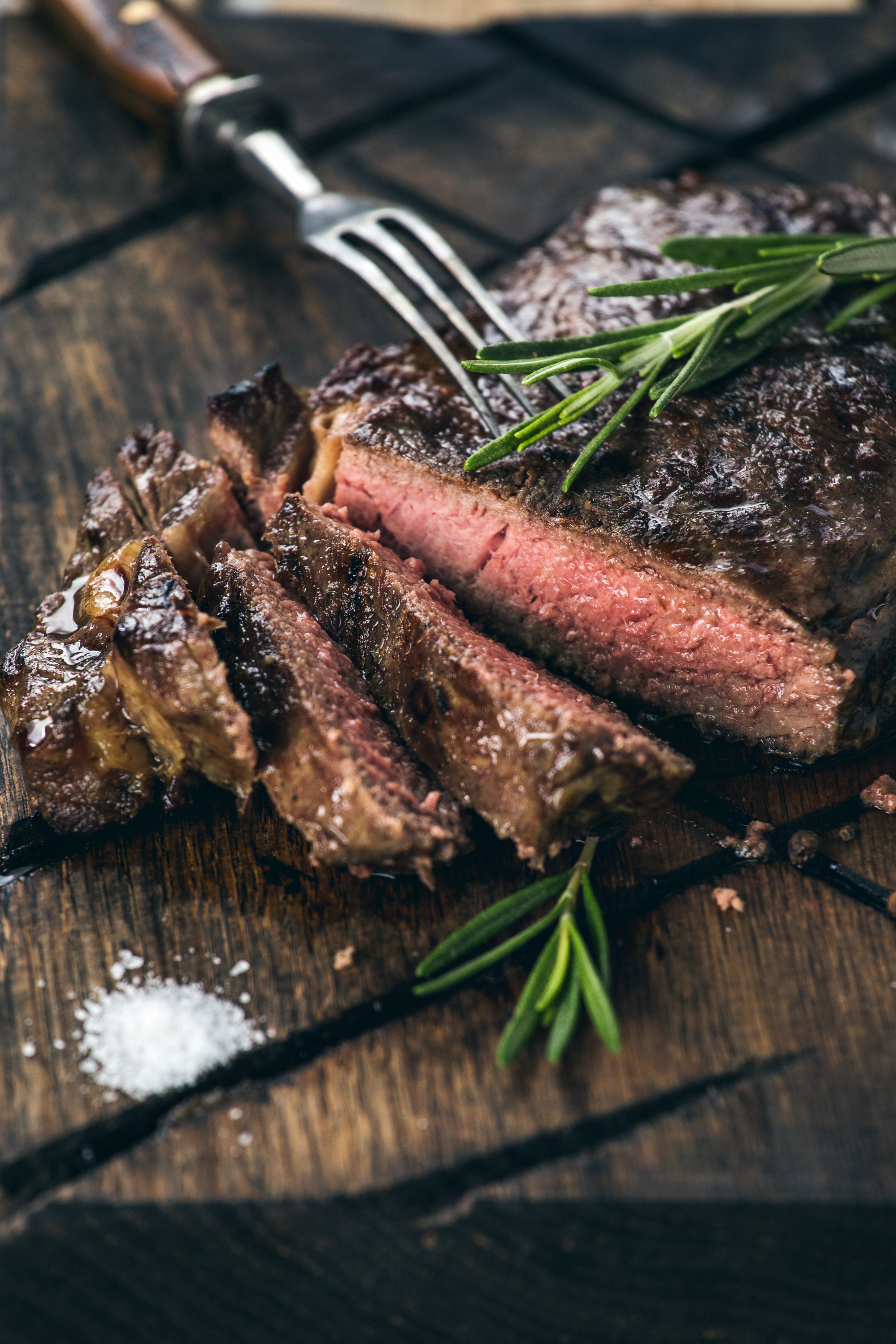
Marinated Flank Steak is tender, delicious and easy to prepare. With a flavorful combination of red wine, soy sauce, olive oil, garlic, parsley and pepper, this flank steak is grilled to perfection and sliced thinly for a juicy and melt-in-your-mouth experience.
- 1/4 cup olive oil
- 1/2 cup soy sauce
- kosher salt to taste
- 2 lbs beef flank steak
- coarsely-ground black pepper to taste
- -- marinade --
- 1/2 cup dry fruity red wine (i use beaujolais, chianti, merlot or pinot noir)
- 4 large cloves garlic peeled and crushed
- 1/4 cup flat-leaf parsley chopped
- coarsely-ground black pepper to taste
- Carbohydrate 44.8900801234786 g
- Cholesterol 0 mg
- Fat 3.82322000548465 g
- Fiber 4.22040006710323 g
- Protein 26.3810400749877 g
- Saturated Fat 0.524106000742898 g
- Serving Size 1 1 Serving (770g)
- Sodium 16802.2015482835 mg
- Sugar 40.6696800563754 g
- Trans Fat 0.215887000442822 g
- Calories 328 calories
Step-by-step
- Score surface of steak by making shallow diagonal cuts across the grain about 1 1/2-inches apart to create a diamond-shaped pattern; repeat on second side of steak. In a small bowl, whisk together wine, soy sauce, oil, garlic, parsley and pepper until well combined. Place steak and marinade in a large heavy-duty zip-lock plastic bag. Press out as much air as possible from bag, seal, and massage lightly to distribute marinade and coat steak thoroughly. Place bag in a shallow dish and marinate in refrigerator for at least 8 hours, overnight, or up to 24 hours, turning and massaging occasionally.
- Preheat grill with high, direct heat. Grill is sufficiently hot when you can only hold your hand at grill level for only 2 or 3 seconds. While grill is preheating, remove steak from refrigerator and let come to room temperature before grilling (helps ensure meat cooks evenly). When ready to grill, remove steak from marinade, pat dry with paper towels, and season both sides liberally with salt and freshly ground pepper to taste (pressing seasonings into meat with your fingers). Clean grill grate well with wire brush and, to prevent sticking, brush with a light coating of oil.
- Place steak on prepared grill grate over a solid bed of hot coals or direct high heat on a gas grill. If using a gas grill, or if your grill has a lid, close it to allow smoke to add it's flavor. Grill steak about 3- to 4-inches* from heat source, for 4 to 5 minutes per side for medium-rare and 6 to 7 minutes for medium (grilling time varies with meat thickness). If desired, to create crosshatch marks, turn steak 45 degrees halfway through grilling on each side. Flank steak is best eaten medium-rare and nicely seared on the outside; flank steak cooked beyond medium will be tough. Do NOT overcook!
- To Broil (optional): Position oven rack about 4-inches from heat source, place broiling pan on oven rack, and heat broiler. When ready to broil, remove steak from marinade, pat dry with paper towels, and season both sides liberally with coarse salt and freshly ground pepper to taste (pressing seasonings into meat with your fingers). Place flank steak on hot broiling pan, coated with cooking spray. Leave oven door ajar, and broil 6 to 7 minutes on each side for medium-rare, 9 minutes on each side for medium.
- When steak is done to your liking, remove from grill and place on cutting board. Double check doneness by thermometer (rare - 130 to 140 degrees F, medium-rare - 140 to 150 degrees F, medium - 150 to 160 degrees F), or by touch (very rare feels soft and squishy, rare is soft to the touch, medium-rare yields gently to the touch, while medium yields only slightly to the touch and is beginning to firm up). Cover steak loosely with foil and let rest for 5 to 10 minutes (five minutes per inch of thickness), allowing meat juices to redistribute and settle. To serve, slice thinly on the bias (at a sharp angle) and across the grain, and arrange on warmed platter or plates.
How long can a cut of beef actually sit in a liquid bath before the exterior turns mushy? Acidic components like dry red wine break down tough muscle fibers over a prolonged period, but letting the meat soak beyond twenty-four hours changes the protein structure so drastically that the surface loses its ability to sear properly. Scoring the surface in a shallow diamond pattern creates channels that allow the marinade to penetrate deeper into the dense grain while giving the exterior more surface area to caramelize over open flames. When transitioning the meat from refrigeration to the cooking grate, always let it sit at room temperature for twenty minutes so the center reaches thermal equilibrium without the exterior burning.
High, direct heat is mandatory here because thin cuts demand an intense thermal shock to form a crust before the interior overcooks past medium-rare. A sufficiently hot grill measures two to three seconds of hand tolerance at the grate level. Once the beef hits the hot bars, resist the urge to move it constantly, turning only once to build deep char lines. Letting the finished steak rest loosely under foil for at least five to ten minutes allows the contracted muscle fibers to relax and reabsorb moisture that would otherwise pool on the cutting board. Slicing the meat thinly across the grain shortens the muscle fibers mechanically, ensuring each bite yields easily instead of pulling apart stubbornly.



