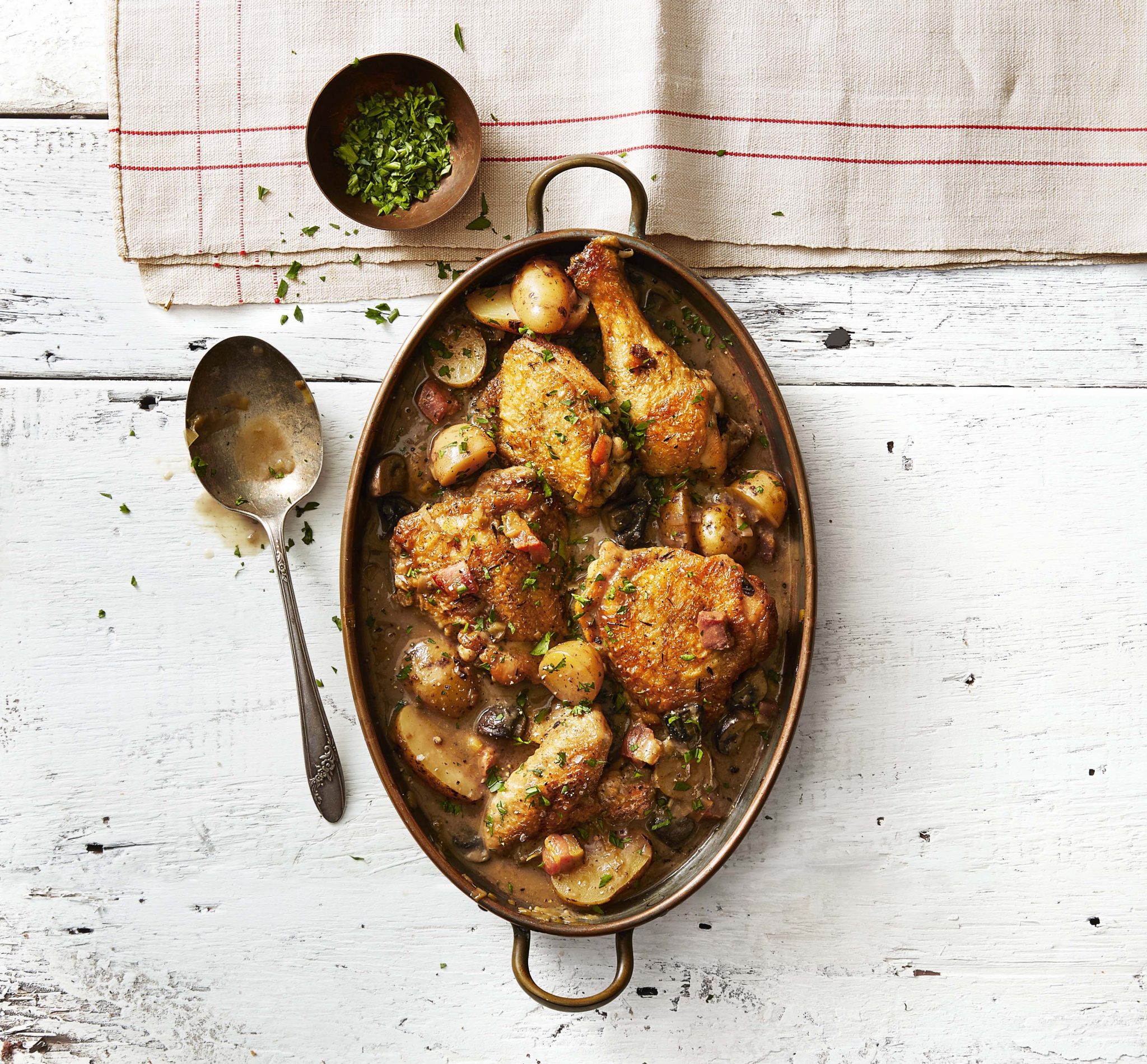
Try this Quicker Coq au Vin Blanc recipe, or contribute your own.
- 1/2 teaspoon dried thyme
- 2 teaspoons olive oil
- salt (to taste)
- black pepper (freshly ground)
- 1 1/2 cups dry white wine
- 4 ounces pancetta (chopped)
- 3 pounds chicken (assorted pieces)
- 1 medium leek (thinly sliced and well rinsed)
- 1 pound golden potatoes (cut into 1-inch chunks)
- 12 ounces cremini mushrooms (quartered)
- parsley (chopped fresh for garnish)
- Carbohydrate 0.593281250484639 g
- Cholesterol 0 mg
- Fat 0.5648218741 g
- Fiber 0.0115625 g
- Protein 0.018281875013048 g
- Saturated Fat 0.078523124875728 g
- Serving Size 1 1 serving (591g)
- Sodium 582.500937500914 mg
- Sugar 0.581718750484639 g
- Trans Fat 0.0161824999756281 g
- Calories 23 calories
Step-by-step
- In Instant Pot using sauté function, cook pancetta in oil, uncovered, for 5 to 7 minutes, or until fat has rendered. Transfer pancetta to plate.
- Meanwhile, pat chicken dry with paper towels; season all over with thyme and 1/2 teaspoon each salt and pepper.
- In batches, add chicken, skin side down, to pot; cook 6 minutes or until browned on two sides, turning once halfway through. Transfer chicken to large plate.
- To pot, add leek and S teaspoon salt; cook 3 minutes, stirring. Add wine. Hit cancel, reselect sauté function, and adjust heat to More; heat to boiling. Hit cancel again, then reselect sauté function (this returns heat to Normal); simmer 5 minutes. Hit cancel to turn off sauté function.
- Add potatoes, mushrooms, and chicken to pot. Cover and lock lid. Select Manual/Pressure Cook and cook at high pressure for 8 minutes. Once cooking is complete, release pressure by using a quick release.
- Serve chicken and vegetables with some cooking liquid. Garnish with parsley.
Surface dehydration governs the success of high-pressure poultry cooking. Patting poultry skin entirely dry removes surface moisture that otherwise causes steaming rather than browning. Rendering pancetta first leaves behind pork fat with a high smoke point, which efficiently transfers thermal energy to sear the chicken skin until crisp. Skipping this initial drying phase prevents the Maillard reaction from developing deep savory compounds.
Acidic dry white wine added directly to hot poultry fond dissolves caramelized browned bits stuck to the metal insert. Boiling the liquid for five minutes evaporates harsh alcohol volatiles while concentrating tartaric acid. Simmering this reduction softens the structural rigidity of leeks by breaking down complex cellular walls before pressure is applied.
Golden potatoes act as a natural starch regulator inside a closed pressure vessel. High-pressure steam at 15 psi forces moisture into the potato starches rapidly, gelatinizing them within eight minutes. Cremini mushrooms simultaneously release interior glutamates into the surrounding liquid, building umami density without long simmering times.
Airtight glass containers preserve leftovers safely for up to three days in refrigeration. Freezing is structurally discouraged because pressure-softened potatoes turn grainy upon thawing due to ice crystal damage breaking internal cell membranes. Reheating portions gently on a stovetop over medium-low heat avoids overcooking the poultry breast meat.



