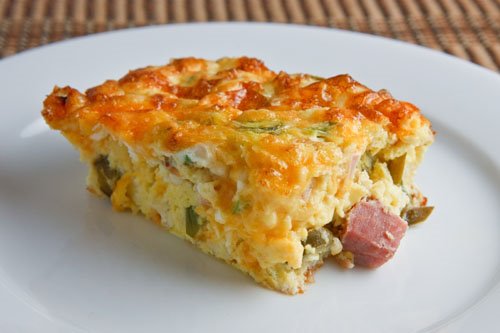
I used this on a regular basis at our Bed and Breakfast.
- Carbohydrate 3.41354900039894 g
- Cholesterol 363.131000017575 mg
- Fat 14.9732275055533 g
- Fiber 0.276140001244985 g
- Protein 18.6425395042045 g
- Saturated Fat 6.87564510353236 g
- Serving Size 1 1 Serving (137g)
- Sodium 393.183000104122 mg
- Sugar 3.13740899915396 g
- Trans Fat 1.55136715028868 g
- Calories 222 calories
Step-by-step
- Preheat oven 350 degrees. Grease 9 x 13 pan
- Layer potatoes and 1/2 of cheese in baking dish. Layer ham, mushrooms, green onions and green pepper.
- Mix eggs, milk, salt and pepper. Pour over layered ingredients. Top with remaining cheese.
- Bake 30 minutes covered loosely with foil. Remove foil and bake 20-30 additional minutes (once the top in brown, you can put foil back on the top loosely to prevent burning). Let sit 10 minutes before serving.
Swapping the whole eggs for a liquid plant-based egg substitute fundamentally alters the hydration level and final protein coagulation of the dish, often resulting in a watery center instead of a set custard. Whole eggs contain essential fats and emulsifiers that trap moisture released by the frozen hashbrowns and vegetables during baking. When reducing dairy by using skim milk instead of whole milk or cream, the lower fat content removes a crucial barrier against overcooking the proteins, making the eggs prone to a rubbery texture if exposed to direct, unshielded heat.
The most common failure mode in this style of casserole involves rushing the thaw on the frozen potatoes. Excess surface ice melts into the baking dish, diluting the egg mixture and preventing the bottom layer of hashbrowns from absorbing flavor and structuring properly. Pressing thawed hashbrowns in a clean kitchen towel removes excess water before layering them in the greased nine-by-thirteen-inch pan, ensuring the base achieves proper density.
Covering the baking dish with foil for the first thirty minutes at 350 degrees Fahrenheit traps steam, allowing the interior ingredients to reach a safe internal temperature without scorching the dairy solids in the cheese. Removing the foil for the final twenty to thirty minutes allows excess surface moisture to evaporate while the top layer browns. If the cheddar darkens too quickly before the center sets, tenting a loose sheet of foil back over the pan blocks direct radiant heat from the upper oven element.
Allowing the baked dish to rest for ten minutes off the heat allows the internal proteins to relax and reabsorb moisture, which makes clean slicing possible. Slicing immediately causes the casserole to collapse because the hot liquids have not yet stabilized within the cooked egg matrix.


