Quinoa Beet Salad with Miso-Tahini Dressing
This nutritious and flavorful salad featuring the vibrant colors of beets, the earthy flavor of quinoa, and a creamy Miso-Tahini dressing is perfect for a healthy and wholesome meal.
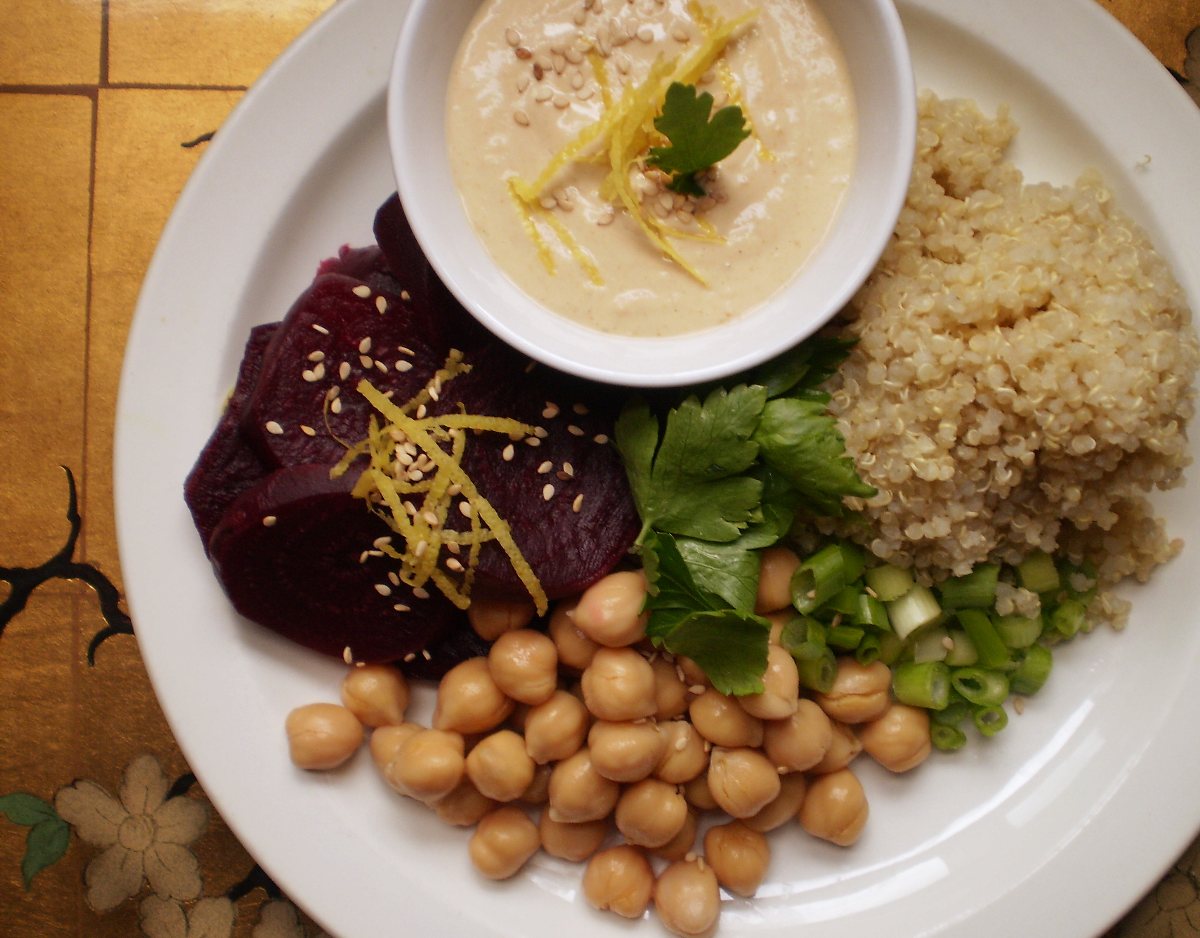
This nutritious and flavorful salad featuring the vibrant colors of beets, the earthy flavor of quinoa, and a creamy Miso-Tahini dressing is perfect for a healthy and wholesome meal.
- 2 cups water
- 1 cup quinoa
- 1 can chick peas (garbanzo beans) rinsed and drained
- 5 beets sliced, cooked (or 6)
- 2 green onions minced
- 1 tablespoon fresh parsley cilantro or mint, chopped
- sesame seeds for garnish
- miso-tahini dressing :
- 1/4 cup tahini
- 1 tablespoon miso
- 3 tablespoons fresh lemon juice
- lemon zest
- 2 tablespoons hot water
- 1 pinch of cayenne pepper
- Carbohydrate 75.9373400295693 g
- Cholesterol 0 mg
- Fat 13.0802728481295 g
- Fiber 13.3419211582727 g
- Protein 18.0043230905625 g
- Saturated Fat 1.72122391761341 g
- Serving Size 1 1 Serving (350g)
- Sodium 551.153520583977 mg
- Sugar 62.5954188712966 g
- Trans Fat 0.956303966028977 g
- Calories 480 calories
Step-by-step
- Place unpeeled beets in medium saucepan, cover with water and add a pinch of salt. Bring to a boil over high heat. Reduce heat and simmer until beets are tender, about 30 minutes depending on the size of your beets. Allow the beets to cool, rinse and peel.
- While the beets are cooking, rinse the quinoa and cook according to package directions (1 cup quinoa for 2 cups water, simmer for about 15-20 minutes).
- To make the dressing : mix all ingredients in a small bowl and whisk until the consistency resembles a liquid paste.
- Toss the cooked quinoa, beets, garbanzo beans and green onions in a large bowl, drizzle with half the dressing, top with fresh parsley and sesame seeds. Serve remaining dressing on the side.
Swapping the water for vegetable broth during the grain hydration phase injects savory depth directly into the seed rather than relying solely on external seasoning. Texture defines successful grain and root vegetable bowls. Achieving the correct mouthfeel requires managing moisture levels at every stage, from boiling dense root vegetables to resting tiny seeds. Root vegetables demand careful water management. Boiling unpeeled roots in salted water protects the interior starches from dissolving into the cooking liquid, preserving a firm, sliceable bite instead of a mealy consistency. Once boiled for thirty minutes and cooled, the skins slip off easily under running water. Undercooked roots remain chalky and dense, while overcooked roots collapse into mush upon tossing.
Managing Moisture and Emulsification
Quinoa behaves much like tiny sponges. Rinsing the raw seed thoroughly removes saponin, a naturally occurring compound that imparts a bitter taste and creates soapy foam during boiling. Simmering one cup of dry grain in two cups of liquid for twenty minutes yields tender spirals that hold their shape. Spreading the cooked grains across a baking sheet accelerates steam release, dropping the temperature quickly and preventing residual heat from turning the starches gummy. When emulsion fails in the dressing, heavy sesame paste separates from acidic lemon juice. Whisking tahini, miso, lemon juice, and hot water vigorously forces oil and water droplets to bind into a smooth, pourable coating that clings to each grain.
- Water temperature too high during dressing whisking will cause the sesame oils to split from the paste; always use warm water rather than boiling water.
- Leaving beets unpeeled during boiling prevents waterlogging, which ruins the final density of the salad.
- Failure to rinse quinoa leaves a bitter residue and excess surface moisture that packs the grains together instead of keeping them fluffy.



