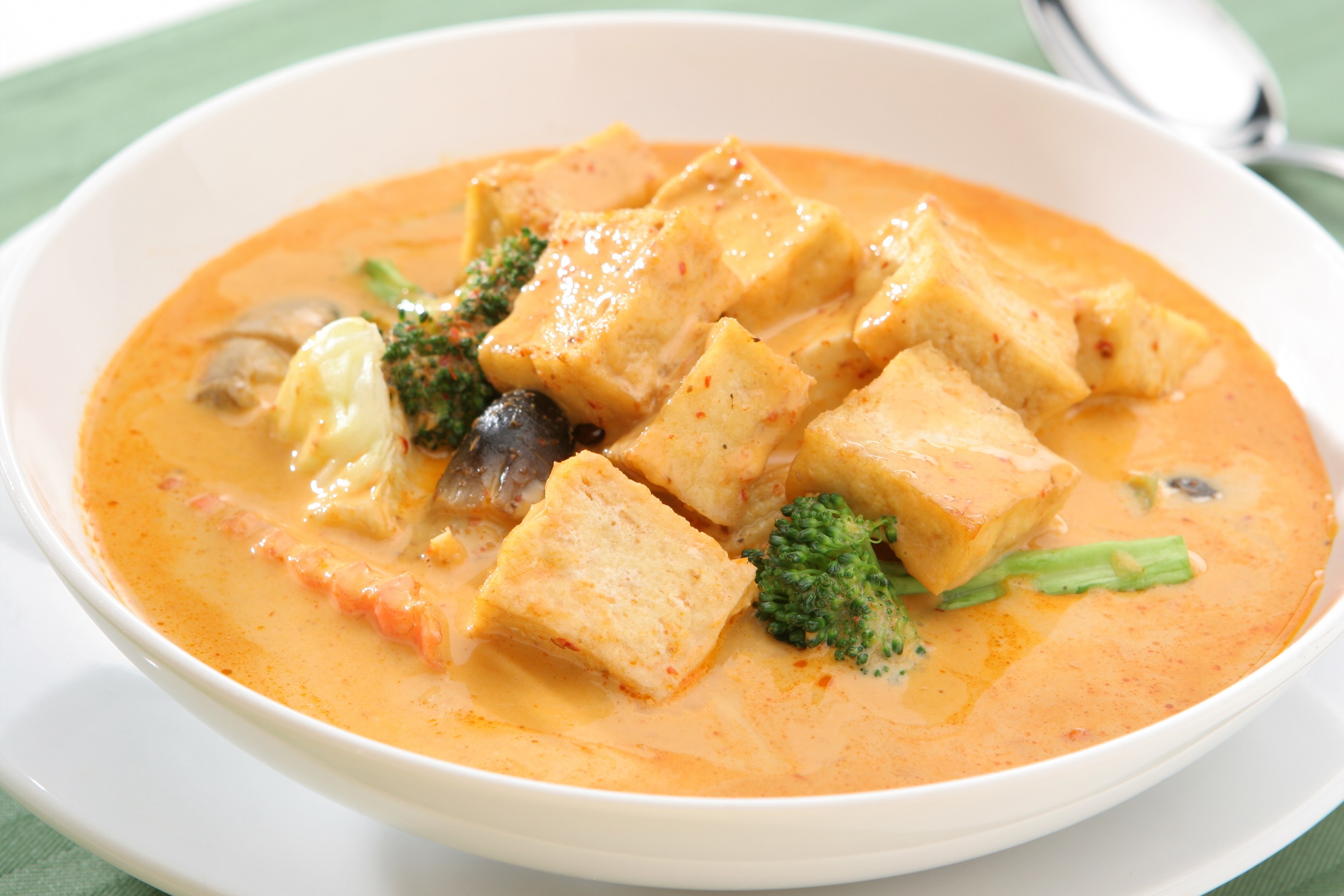
Vegetarian delight. Quick & Easy!
- 1 can coconut milk (see ingredient notes)
- 2 tablespoons fresh cilantro chopped
- 1 teaspoon red curry paste or to taste (see ingredient notes)
- 1/2 teaspoon brown sugar
- 1/2 teaspoon salt or to taste
- 14 ounces extra-firm tofu preferably water-packed
- 2 teaspoons extra-virgin olive oil (i also like to use coconut)
- 1 bag baby spinach ( or 4 cups fresh)
- 1 medium red bell pepper sliced
- Carbohydrate 11.5118479160473 g
- Cholesterol 0 mg
- Fat 36.6163733322529 g
- Fiber 2.90561251491708 g
- Protein 14.9767462498652 g
- Saturated Fat 27.1660042498421 g
- Serving Size 1 1 Serving (341g)
- Sodium 84.0613333327795 mg
- Sugar 8.6062354011302 g
- Trans Fat 2.3981183332538 g
- Calories 401 calories
Step-by-step
- To prepare sauce: Whisk coconut milk, cilantro, curry paste, brown sugar and salt in a small bowl.
- To prepare tofu: Drain and rinse tofu; pat dry. Slice the block crosswise into eight 1/2-inch-thick slabs. Coarsely crumble each slice into smaller, uneven pieces.
- Heat oil in a large nonstick skillet over high heat. Add tofu and cook in a single layer, without stirring, until the pieces begin to turn golden brown on the bottom, about 5 minutes. Then gently stir and continue cooking, stirring occasionally, until all sides are golden brown.
- Add spinach, red bell pepper and the curry sauce and cook, stirring, until the vegetables and spinach has wilted.
- Creamy Thai curry sauce gives tofu a spicy, satisfying kick. You can adjust the amount of curry paste depending on your spice preference. Serve with brown basmati rice and lime wedges.
Securing the Crust Without Burning
Letting the tofu sit completely undisturbed in the skillet for the initial five minutes over high heat is the single most critical factor determining whether the pieces develop a proper golden-brown crust or simply tear apart and stick to the pan. Extra-firm water-packed blocks require thorough paper-towel blotting beforehand, because surface moisture prevents the oil from transferring direct heat efficiently. When moisture meets hot oil, steaming occurs instead of frying, which leaves the soy protein soggy rather than pleasantly chewy. Utilizing a heavy nonstick skillet distributes thermal energy evenly across the surface, ensuring that every irregular craggy edge browns uniformly while the interior retains its moisture.
Balancing Heat and Coconut Fat
Red curry pastes vary wildly in their concentration of dried chili peppers, galangal, and lemongrass, meaning that dumping a full tablespoon blindly into the coconut milk can easily overwhelm the palate. Incorporating reduced-fat coconut milk prevents the final sauce from breaking under high heat, whereas full-fat versions often separate into an oily slick if boiled too aggressively. Whisking the paste thoroughly into the cold liquid before it hits the pan disperses the aromatic oils evenly, preventing pockets of extreme spice from concentrating in a single bite. Adjusting the brown sugar downward will highlight the natural sweetness of the sliced red bell peppers, while adding extra lime juice at the table restores necessary acidity to cut through the heavy saturated fats of the coconut.


