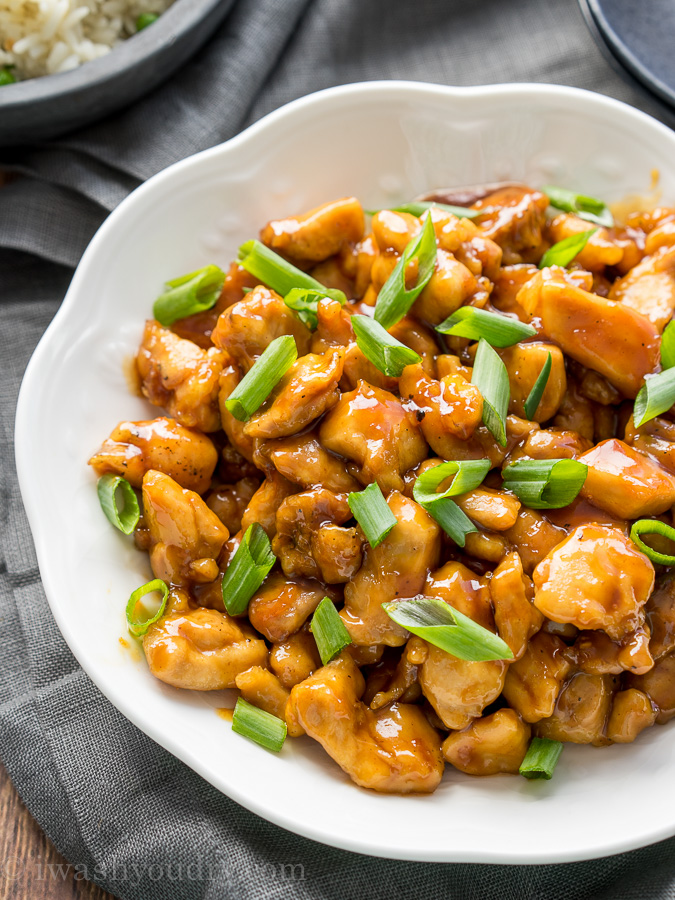
Try this General Tso's Chicken recipe, or contribute your own.
- 1/4 cup sugar
- salt and pepper
- 1/4 cup soy sauce
- 2 tbsp rice vinegar
- 1/2 tsp cayenne pepper
- 2 tbsp vegetable oil
- 1 1/2 lbs. boneless skinless chicken thighs cut into bite-sized pieces
- 1/4 cup cornstarch plus 2 tsp; divided
- 1/4 cup unsweetened pineapple juice
- 2 cloves garlic pressed (or finely minced)
- 1/4 tsp dried ginger
- 1/3 cup sliced green onions for garnish
- Carbohydrate 74.5278624546178 g
- Cholesterol 564.72250065 mg
- Fat 49.2425292314869 g
- Fiber 15.6431781579991 g
- Protein 159.303897348888 g
- Saturated Fat 8.60422620749513 g
- Serving Size 1 1 recipe (1855g)
- Sodium 14676.0716610459 mg
- Sugar 58.8846842966187 g
- Trans Fat 6.18953418751 g
- Calories 1355 calories
Step-by-step
- Place the cut up chicken in a large bowl and season with salt and pepper. Add 1/4 cup cornstarch to the bowl and toss to coat evenly.
- Heat the vegetable oil in a large wok or skillet over medium-high heat. Once the oil is hot, brown the chicken on all sides (you may have to do a few batches to not over crowd your skillet), remove from the skillet once browned to a paper towel lined plate and keep warm.
- Meanwhile whisk together the remaining ingredients (2 tsp corn starch, 1/4 cup sugar, 1/4 cup soy sauce, 1/4 cup pineapple juice, 2 tbsp rice vinegar, 2 cloves of pressed garlic, 1/2 tsp cayenne pepper and 1/4 tsp dried ginger in a medium size bowl.
- Once the chicken is cooked add the sauce to the empty skillet. Stir and let the sauce cook for about 3 to 5 minutes or until it thickens.
- Add the chicken back to the skillet and toss to coat. Serve hot over a bed of steamed rice and garnished with sliced green onions. Enjoy!
Operating within the limits of a standard home kitchen requires managing moisture and heat distribution carefully to replicate restaurant-style crispness without heavy commercial frying equipment. This popular Chinese-American creation emerged in mid-century Taiwan through Hunanese culinary traditions before adapting to American palates with sweeter flavor profiles. While fresh ginger root provides a sharper, more pungent bite and brighter aromatic notes than its dried counterpart, dried ginger delivers a reliable, concentrated warmth that blends smoothly into high-sugar reductions without burning or leaving fibrous bits in the pan. Maintaining high heat during the initial searing stage prevents the meat from steaming in its own juices while the cornstarch coating creates a protective barrier that locks in moisture.
Mastering the Starch and Searing Process
Tossing poultry pieces in cornstarch before frying creates a dry, powdery exterior that absorbs rendered fat and browns evenly when placed into shimmering hot oil. Crowding the cooking vessel lowers the oil temperature rapidly, which causes the coating to absorb grease instead of crisping; working in smaller batches solves this thermal drop. Once the liquid components are introduced to the hot skillet, continuous movement prevents the sugars from scorching against the metal surface while the remaining starch activates to achieve a glossy, clinging consistency.
- If the sauce fails to thicken after five minutes, create a slurry by mixing one teaspoon of cornstarch with one tablespoon of cold water before whisking it directly into the bubbling liquid.
- When chicken pieces stick to the bottom of the skillet, wait thirty seconds longer for the natural proteins to release from the metal before attempting to flip them.
- Should the oil begin to smoke heavily during the browning phase, remove the pan from the burner briefly to lower the temperature and prevent rancidity.


