Buttermilk Biscuits
I have worked on making the best biscuits for years. This is adapted from one I found elsewhere.
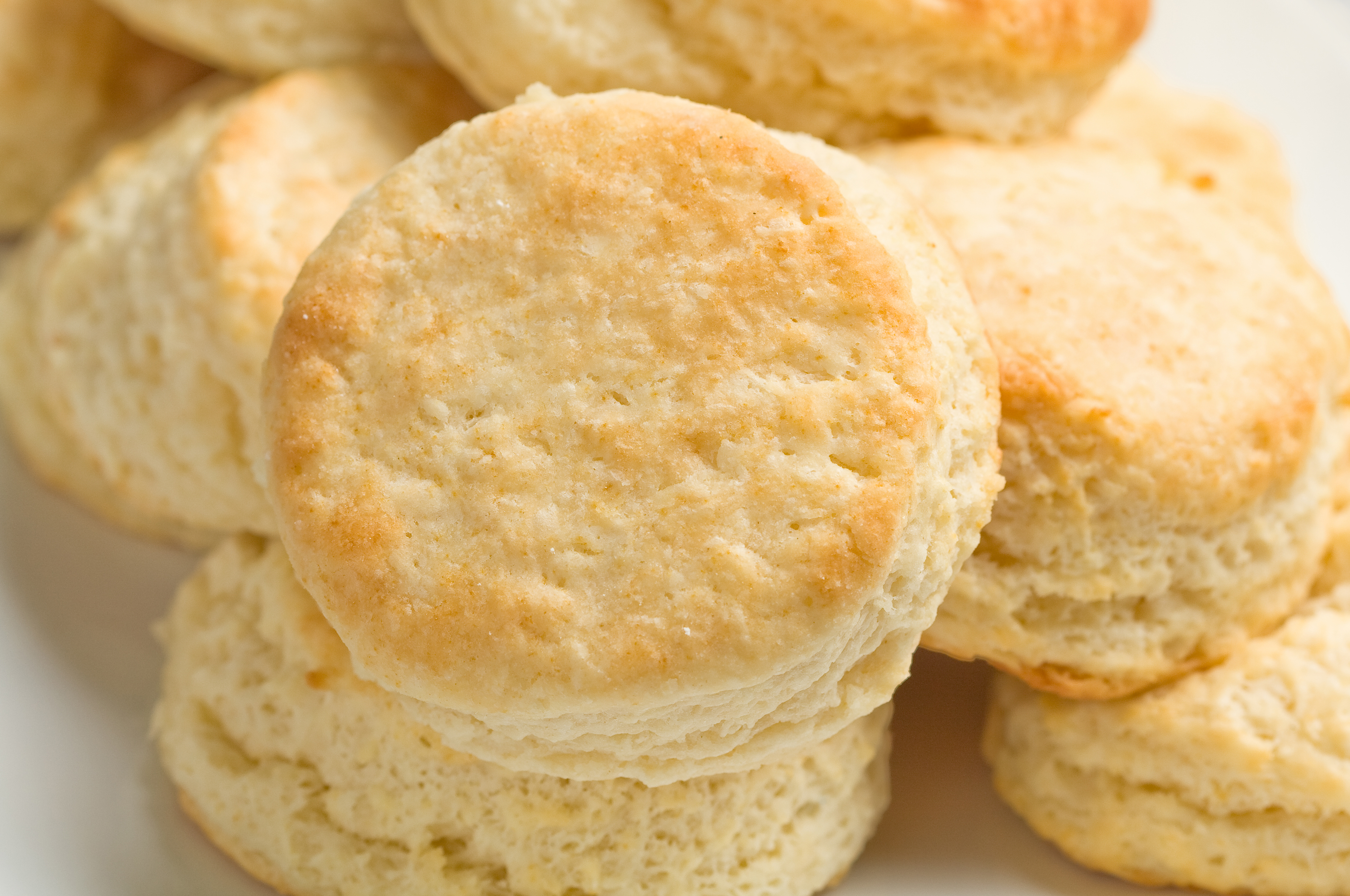
I have worked on making the best biscuits for years. This is adapted from one I found elsewhere.
- Carbohydrate 46.3770984455114 g
- Cholesterol 16.6800000113453 mg
- Fat 9.05356889875235 g
- Fiber 1.20961113362972 g
- Protein 6.4138250080676 g
- Saturated Fat 4.5042942261255 g
- Serving Size 1 1 Serving (173g)
- Sodium 8464.2463889719 mg
- Sugar 45.1674873118817 g
- Trans Fat 0.623753389486091 g
- Calories 276 calories
Step-by-step
- Preheat oven to 500° F and set oven rack to the center of the oven.
- Combine dry ingredients in a food processor and pulse to blend. Add chilled Butter and Lard and pulse until the the mixture looks pebbly.
- Remove from the food processor and put this mixture in a bowl and gently stir in the Buttermilk until just incorporated.
- Turn onto a flour board and flour the top, and fold over, flour, pat, fold, flour until barely workable.
- Cut biscuits and put them on a baking pan prepared with a baking sheet with the sides just kissing each other.
- Put them in the oven, close the oven door, and turn the temperature down to 450° F. Bake for 10-12 minutes.
Thermal Shock and Leavening
Working with a blazing hot 500 degrees Fahrenheit oven initial temperature creates rapid steam expansion inside the dough layers. Baking soda reacts immediately with the acidic buttermilk to generate carbon dioxide gas, while the baking powder provides a secondary lift during the bake. Keeping the oven door closed maintains this crucial heat energy. Lowering the dial to 450 degrees Fahrenheit prevents scorching while the interior sets completely within 12 minutes.Fat Distribution and Texture
Pulsing chilled butter and lard in a food processor coats the flour proteins quickly without melting the solid fats. Lard yields a tender crumb due to its high melting point, whereas butter contributes moisture and dairy solids that brown during baking. Blending these fats until the mixture resembles coarse pebbles ensures pockets of steam form as the lipids melt in the heat.Hydration and Lamination
Stirring buttermilk gently prevents the excessive gluten development that creates tough bread instead of flaky pastry. Folding the sticky dough multiple times on a floured surface creates distinct internal sheets. Positioning the cut rounds so their edges touch forces vertical rising rather than spreading outward.Pairing these warm breads with savory gravies or salted butter balances their mild acidity.


