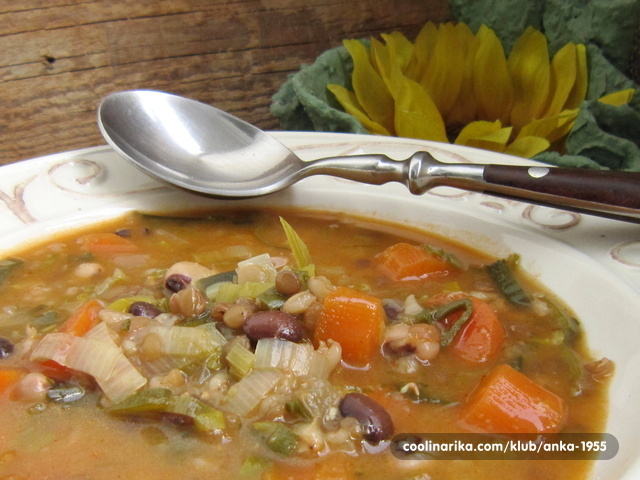
Varivo s porilukom i miješanim grahoricama
- sol papar
- 2 poriluka
- 1 å¡alica (2 dcl mixa mjeå¡avine grahorica ( jeäam suhi graå¡ak, leä‡a smeä‘a, crvena zelena,grah..)
- 1 å¡alica slanutka
- 1 å¾lica umeboshi octa
- 1 å¾lica misoa ( goveä‘a kocka u zamjenu)
- 2 mrkve
- 1 kapula (crveni luk)
- 1 mala å¾liäica crvene paprike ili
- paradajz iz konzerve 1- å¾lica velika
- 1 å¾lica ulja ili masti
- 2 äena äeå¡njaka ili peå¡t*
- 1/2 äaå¡e zobenih pahuljica za zguå¡njavanje variva
- Carbohydrate 0 g
- Cholesterol 0 mg
- Fat 0 g
- Fiber 0 g
- Protein 0 g
- Saturated Fat 0 g
- Serving Size 1 1 recipe (0g)
- Sodium 0 mg
- Sugar 0 g
- Trans Fat 0 g
- Calories 0 calories
Step-by-step
- Dan prije ..navecer mix grahorica i slanutak staviti namociti i napuniti vodom do vrha u posudi da napuhnu. Možete posebno slanutak, a posebno mix namociti pa skuhati ja to skupa. Ujutro iscjediti i oprati u više vodaNa 1 cašu mixa 1 cašu slanutka stavim 9 caša vode, Ili ga hkuhate cca 1 ,15 minuta kuhati u expres loncu, kad zakuha stavim poklopac i onda kad zapišti pipac smanjim sa 7-8 na struji i stavim na 4 da kuha cca 40-50 minuta. Ili skuhajte u obicnom loncu. Kad je kuhani bacim vodu malo sacuvam 1 dcl. koji dodam s varivom.
- Poriluk je dobar smrznuti prije jer je ukusniji...to su stare domacice znale napraviti jer kad bi onako polusmrznti donesle iz vrta skužile bi da je ukusniji nego u svježem stanju. Poriluk oprati i narezati na kolutice kao i mrkvu. Kapulu sitno narezanu (crveni luk malo masti ili ulja prepržit cešnjak narezan sitno na kockice kratko isto popržiti ili dodati pešt* (1 žlicicu) ,dodati mljevenu papriku, ili malo paradajza tekuceg i prepržiti i dodati u varivo….. Dodati 1 žlicu ume boshi octa , 1 žlicu miso paste a ako nemate 1-2 govede kocke Podravka ovisi koju kolicinu kuhate. pri kraju morske soli i papra po okusu skoro da i ne solim jer ume boshi ocat i miso pasta imaju slanost i daju punocu ovom varivu. Kuhati dok se mrkva i poriluk ne sjedine cca 35-40 min.. Ako vam nije dovoljno gusto uzmite 1 cašu gušceg sadržaja i zm,iksajte štapnim mikserom, ili dodajte 1/2 caše zobenih pahuljica one se raspadnu i zgusnu varivo
- Ovo varivo može biti i bez mesa, tako ga ja više volim ili s kobasicama, suhim rebricama jer moji neki vole meso. Ako nemate ume boshi ocat i miso u zamjenu stavite govedsku Podravka kocku.. Recepti na temu poriluka kod mene: ? salata od poriluka ?salata od poriluka sephia ? poriluk cušpajz "soparni" ? piletina na poriluku ? krem juha od batata brokule i poriluka ? teleca prsa punjena porilukom ? marinirani poriluk ? zeleni kašasti sok ? u juhe ga stavljam...? rižoto s porilukom super se slaže s rižom
- Poriluk je dobar izvor vitamina C i B6, folne kiseline, mangana i željeza. Znacajna djelatna tvar u poriluku je etericno ulje u kojem ima sumpora. Blagotvorno djeluje na izlucivanje želucanih i crijevnih sokova, jetre i žuci te sprjecava procese gnjiljenja i vrenja u crijevima, štiti od karcinoma debelog crijeva. Sumporne fitokemikalije pomažu regulirati razinu šecera u krvi, snizuju krvni tlak i razinu kolesterola. Smatra se da poriluk djeluje povoljno i na izlucivanje mokrace te izlucivanje sluzi iz dišnih organa. Zbog visoko sadržaja vitamina poriluk je važno zimsko povrce te ga treba u to vrijeme obilno jesti. Koristi se cijeli – i bijela stabiljka i zeleno lišce, koje sadrži nekoliko puta više vitamina nego bijeli dio. Preporuca se jesti ga što više svježeg u salatama. Recepti narodne medicine Kod povecane štitnjace, na vrat se stavljaju topli oblozi od kuhanog poriluka. Kod upale i ostalih bolesti bubrega skuha se poriluk s krumpirom i mlijekom, bez soli. Kod gihta i križobolje zdrobi se cijeli poriluk pa se stavlja na bolna mjesta. Kod kašlja, jedan veci poriluk se ujutro sitno izreže i stavi u lonac. Doda se mlijeka 2 dl mlijeka pa se sve zajedno prokuha. Kad se ohladi, smjesu propasiramo odnosno štapnim mikserom usitnimo i dodamo 3 žlice meda. Jede se pomalo tako da se sve potroši do spavanja.
Soaking mixed legumes and chickpeas for twelve hours before boiling initiates the starch-softening process required for uniform cooking. Dried beans cooked without this pre-hydration step will experience differential swelling, leaving the outer skins tough while the interiors disintegrate into mush. Pressure cooking these soaked pulses at high pressure for forty to fifty minutes cuts down the traditional stove-top method significantly, though a standard heavy-bottomed pot works equally well if extra liquid is maintained throughout the simmer.
Balancing Fermented Seasonings and Fats
Miso paste and umeboshi vinegar supply deep umami and sharp salinity that reduce the need for added sodium chloride. Adding these fermented ingredients toward the end of the cooking process preserves their delicate enzymatic profiles, preventing the high heat from dulling their distinct flavors. Sautéing the aromatics—specifically chopped onions and minced garlic—in a small amount of oil or rendered fat before they hit the broth caramelizes the surface sugars, creating a flavor base that raw boiling cannot replicate. For structural density, stirring in half a cup of rolled oats during the final stages of the simmer releases starches that naturally bind the cooking liquid without requiring a separate roux.
Utilizing Vegetable Density and Accompaniments
Leeks contain high levels of sulfur compounds and essential oils that mellow considerably when simmered alongside root vegetables like carrots for thirty-five to forty minutes. Retaining one deciliter of the liquid drained from the boiled legumes provides a starchy blending agent if the stew requires thinning or adjusting. Pair this dense vegetable stew with crusty sourdough bread to offset the heavy, earthy texture of the mixed beans, or serve alongside smoked pork ribs if a meat-based variation is desired by dinner guests.


