Pie Crust
This is a super easy super flaky pie crust I have been known to make several batches and freeze them for up to three months to use at a later date
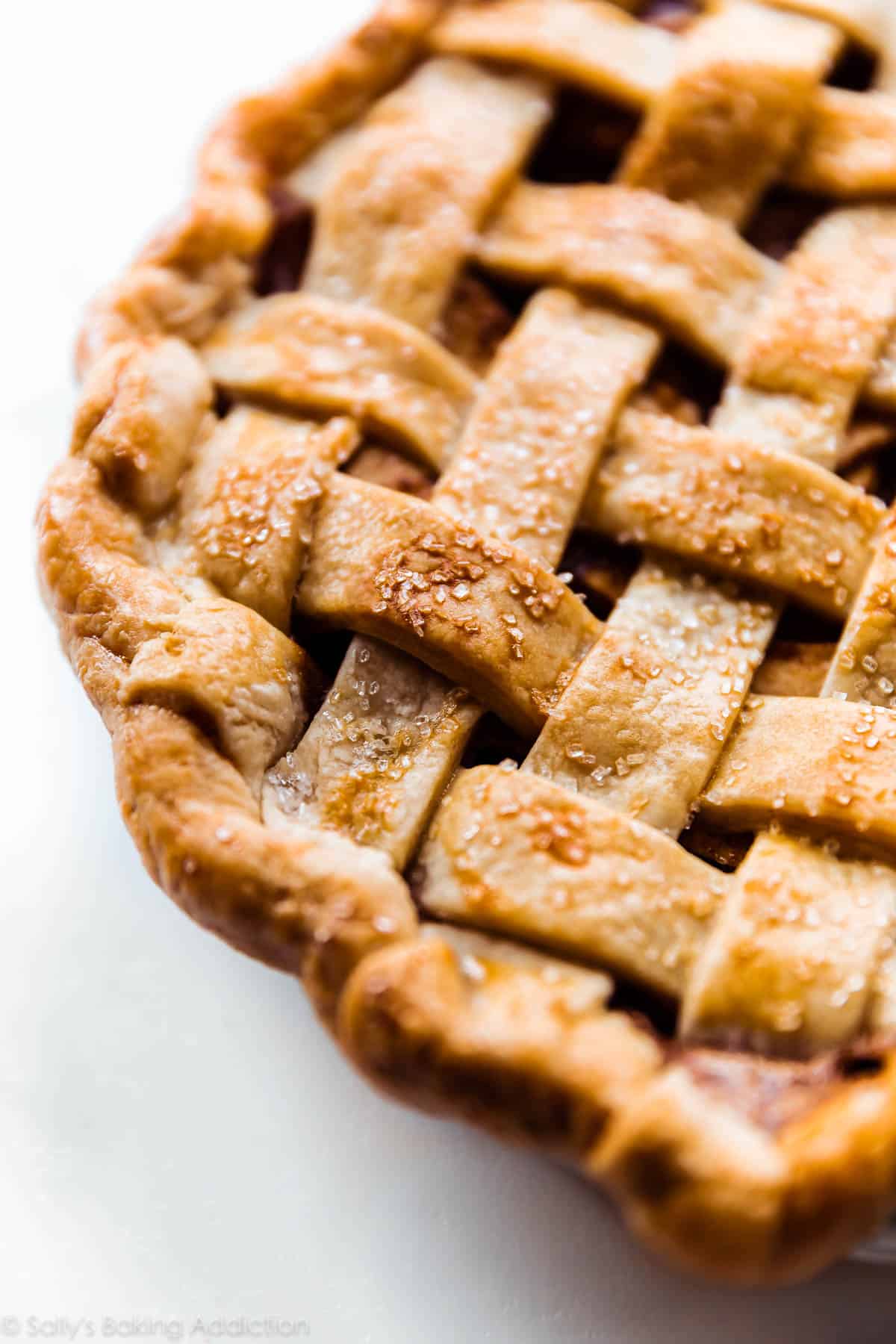
This is a super easy super flaky pie crust I have been known to make several batches and freeze them for up to three months to use at a later date
- Carbohydrate 276.559198146051 g
- Cholesterol 289.440000139801 mg
- Fat 145.185334079144 g
- Fiber 9.18245077706678 g
- Protein 33.3702648136817 g
- Saturated Fat 78.1134618530512 g
- Serving Size 1 1 Serving (606g)
- Sodium 656.257509725061 mg
- Sugar 267.376747368984 g
- Trans Fat 9.6771605452907 g
- Calories 2549 calories
Step-by-step
- Put the flour, sugar and salt in a large bowl; stir to combine.
- Work the butter and lard into the flour mixture until pieces are no larger than a marble.
- Add the vinegar and water; mix briefly to combine. If the dough feels dry add water, one tablespoon at a time, to achieve desired consistency.
- Turn the dough out onto a work surface and smear the dough using the frisage method, just until the dough comes together, about 5 times.
- Flatten the dough, wrap it in plastic and let it rest for at least 1 hour.
Why is this dough refusing to hold together on the counter? Cold fats are the entire mechanism behind flaky pastry. When solid pieces of butter and lard measure no larger than a marble within the flour, they melt during baking to release steam, leaving pockets of air that create distinct layers. Warm those fats up with ambient room temperature or friction from warm hands, and the results turn greasy and tough. Keeping the butter and lard ice cold before cutting them into the flour prevents premature melting. Incorporating a small amount of acid via vinegar or lemon juice inhibits gluten development, keeping the texture tender rather than rubbery. Work quickly when adding the six tablespoons of ice water. Smearing the ingredients through the frisage technique on the work surface aligns the butter shards without overworking the gluten network, but limit this motion to roughly five passes. Once wrapped in plastic, the dough requires a mandatory rest of at least one hour in the refrigerator to allow the flour to hydrate fully and the fats to re-solidify. Freezing raw pastry discs for up to three months is entirely viable if they are wrapped tightly in plastic wrap and stored inside an airtight freezer bag to prevent freezer burn. Thaw frozen pastry overnight in the refrigerator before rolling to avoid cracking. Leftover baked pastry scraps can be rebaked with cinnamon and sugar for quick morning snacks.


