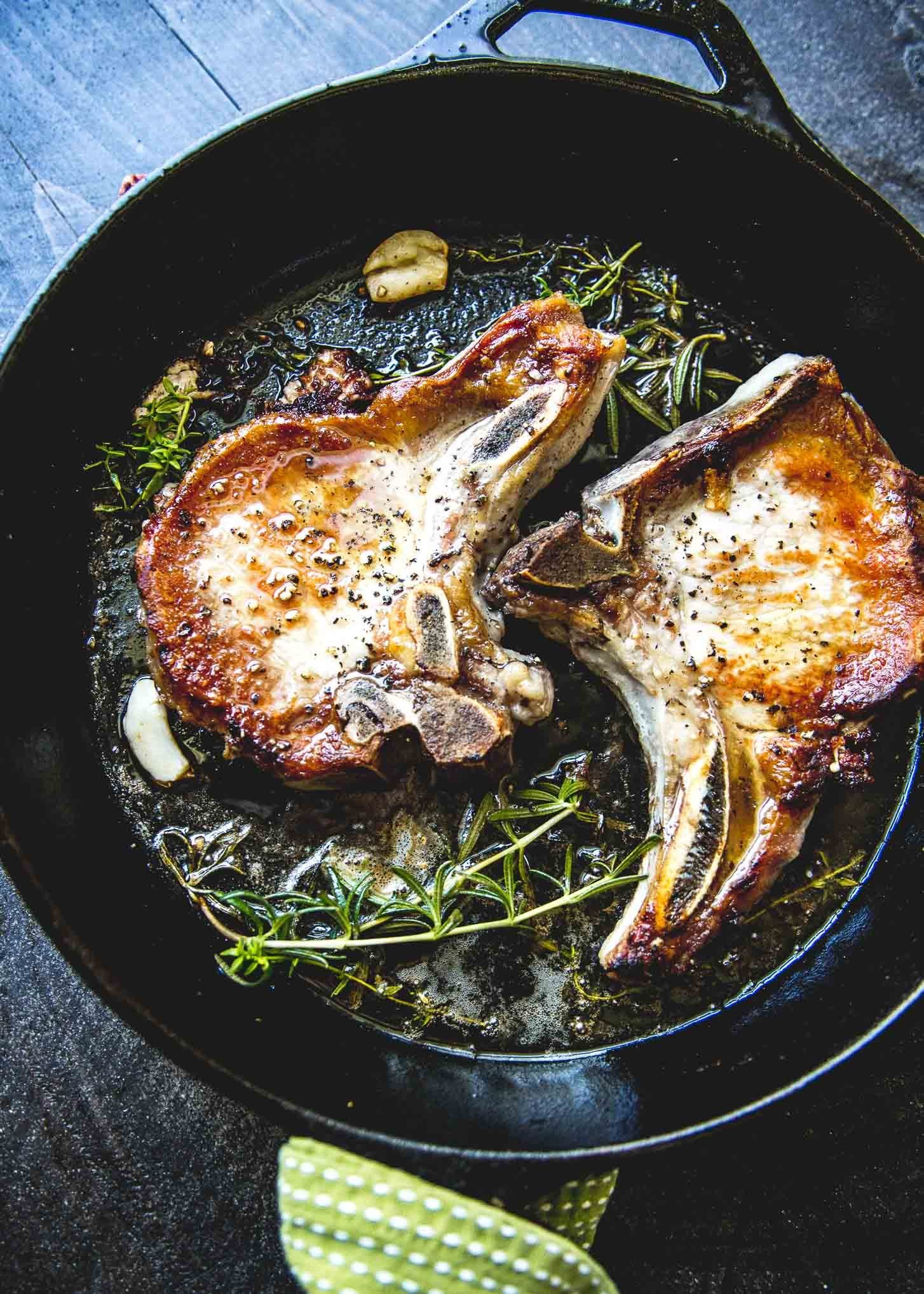
Marinate your pork chops for a mouthwatering taste hot off the grill.
- Carbohydrate 3.57932888195989 g
- Cholesterol 0.468 mg
- Fat 0.570354534962572 g
- Fiber 0.200606903461812 g
- Protein 0.70947828679462 g
- Saturated Fat 0.140009139118092 g
- Serving Size 1 1 Serving (19g)
- Sodium 41.7615960595546 mg
- Sugar 3.37872197849808 g
- Trans Fat 0.0492625120462995 g
- Calories 20 calories
Step-by-step
- Brush all sides of Pork Chops with the lemon juice.
- In a small bowl, combine remaining ingredients; mix well. Rub mixture over Pork Chops. Arange pork on baking dish. Cover; refrigerate several hours or overnight.
- Prepare grill for Med. heat.
- Grill chops 12 to 15 min or till internal temperature of pork reaches 155 to 160 degrees F.
Lemon juice drives this entire marinade, acting as the primary tenderizer by breaking down tough muscle fibers on the surface of the meat. Acid changes protein structures rapidly, meaning chops left in citrus for more than twelve hours turn mushy rather than tender. Mild olive oil coats the meat to prevent sticking on the grill grates while carrying fat-soluble compounds from the parsley, rosemary, thyme, and sage directly to the surface.
Reading Doneness Without A Thermometer
Many home cooks struggle to judge pork without a digital probe, yet tactile and visual tests remain reliable when executed correctly. Press the center of the chop firmly with an index finger; raw meat feels soft and squishy, whereas medium doneness yields a resilient, springy resistance. Slicing directly into the thickest part reveals internal juices; clear running juices indicate safety, while pink or red liquid demands another two minutes on the grates. Resting the cooked meat for five minutes on a warm cutting board allows internal moisture to redistribute evenly through the muscle fibers instead of pooling on the plate.
Managing Timing And Sequencing
Refrigerating the seasoned meat for at least four hours lets the dried bouillon and fresh herbs penetrate the exterior layers effectively. Medium grill heat requires holding a bare hand four inches above the grates for precisely five to seven seconds before pulling it away. Placing cold meat straight from the refrigerator onto a hot grill seizes the exterior, so tempering the chops at room temperature for fifteen minutes ensures even cooking throughout the center.



