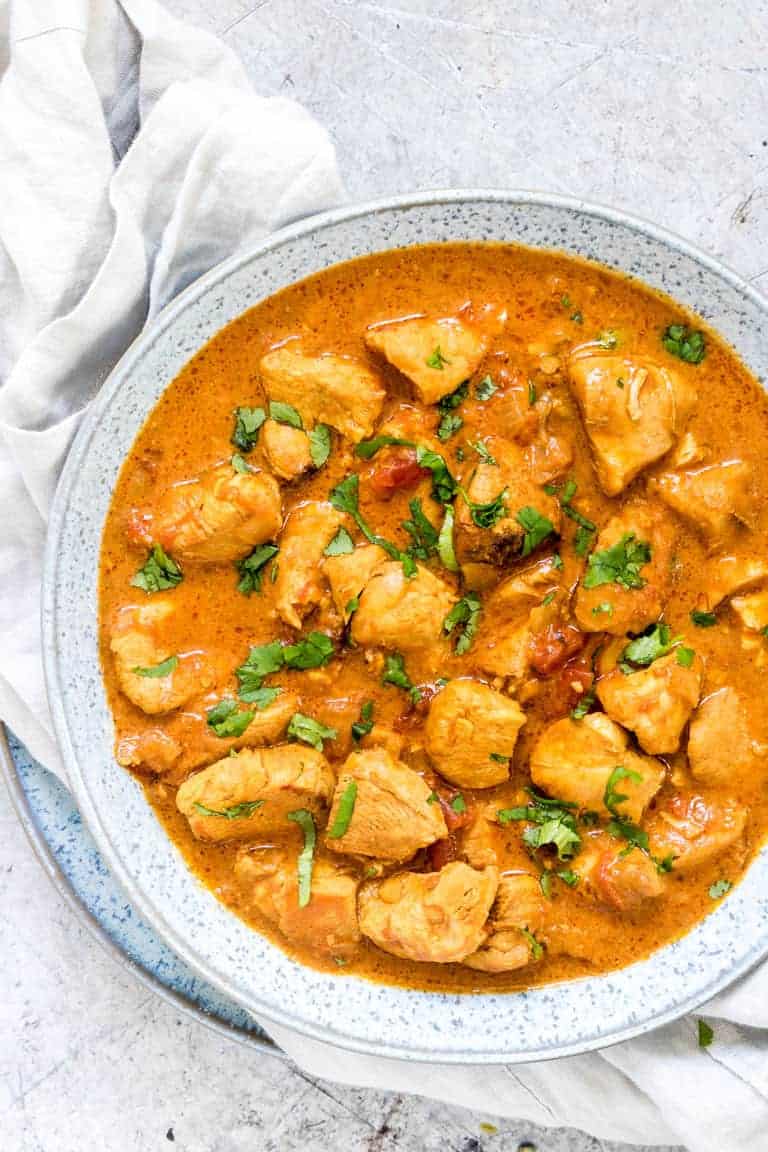
This is an authentic Indian Curry I learned from a friend who was raised in Bombay
- 3/4 tablespoons ginger minced or use powdered
- 3/4 tablespoons tumeric scant
- 1 1/2 tablespoons coriander ground
- 1 tablespoons cumin ground
- 3/4 tablespoons salt
- 1/2-1 teaspoons chili ground
- 8 each chicken thighs skinless, bone in
- 1 each red onion each
- 2 tablespoons butter oil or ghee are alternates
- 1/4 cups water not usually needed if you are using water chilled chicken; air chilled chicken tastes much better
- 1 each lemon
- Carbohydrate 11.3405915023957 g
- Cholesterol 173.1715625 mg
- Fat 35.1697393753161 g
- Fiber 2.73494993656997 g
- Protein 34.1099033755055 g
- Saturated Fat 11.9821159750807 g
- Serving Size 1 1 Serving (316g)
- Sodium 202.389162503879 mg
- Sugar 8.60564156582572 g
- Trans Fat 2.45950480010229 g
- Calories 493 calories
Step-by-step
- mix the spices together in a small jar or bowl and set aside
- slice the onion in half land then slice thinly (a mandoline is great here)
- use butter or oil to fry the onion slowly (takes about 15 minutes). The goal is to carmelizle the onions but not brown them)
- add a little water to the spices to make a paste that you can pour (thick but not lumpy)
- add the paste to the onion and stir fry these for about 30-45 seconds.
- add the chicken, turning to coat.
- cut lemon in quarters and add to pot.
- add water if using
- Leave to cook on low until chicken is tender - about 70-90 minutes.
- Serve over rice (basmati is best).
Most cooks ruin spiced poultry dishes by rushing the aromatics, turning the heat up too high and scorching the ground spices before they hydrate properly. Slicing the red onion thinly on a mandoline ensures even breakdown during the fifteen-minute frying phase, where the goal remains achieving translucent sweetness without dark browning. Spices burn instantly in dry pans, meaning mixing ground coriander, turmeric, cumin, and chili with a splash of water creates a pourable paste that protects the powders from heat shock.
The Spice Paste Technique
Hydrating the ground spices prior to pan contact prevents acrid bitterness while maximizing extraction into the butter or ghee fat base. Stir-frying this wet paste for exactly thirty to forty-five seconds releases essential oils without scorching the delicate botanical compounds. Using fresh ginger root yields a brighter pungency than powdered alternatives, though dried ginger remains an acceptable pantry swap at a one-to-one volume ratio.Managing Moisture and Meat
Bone-in skinless chicken thighs release natural juices during the seventy to ninety minute simmer, reducing the need for added liquids unless using dry air-chilled birds. Quartered lemons tossed directly into the simmering vessel introduce citric acid slowly, balancing the heavy fats from the poultry skin and dairy elements. Simmering uncovered during the final ten minutes allows excess moisture to evaporate, concentrating the sauce into a clingy glaze rather than a thin broth.


