Italian Beef
This is as close as I can come to authentic Chicago style Italian beef. It's more like a New Orleans Debris from Mother's Restaurant. But most folks like it.
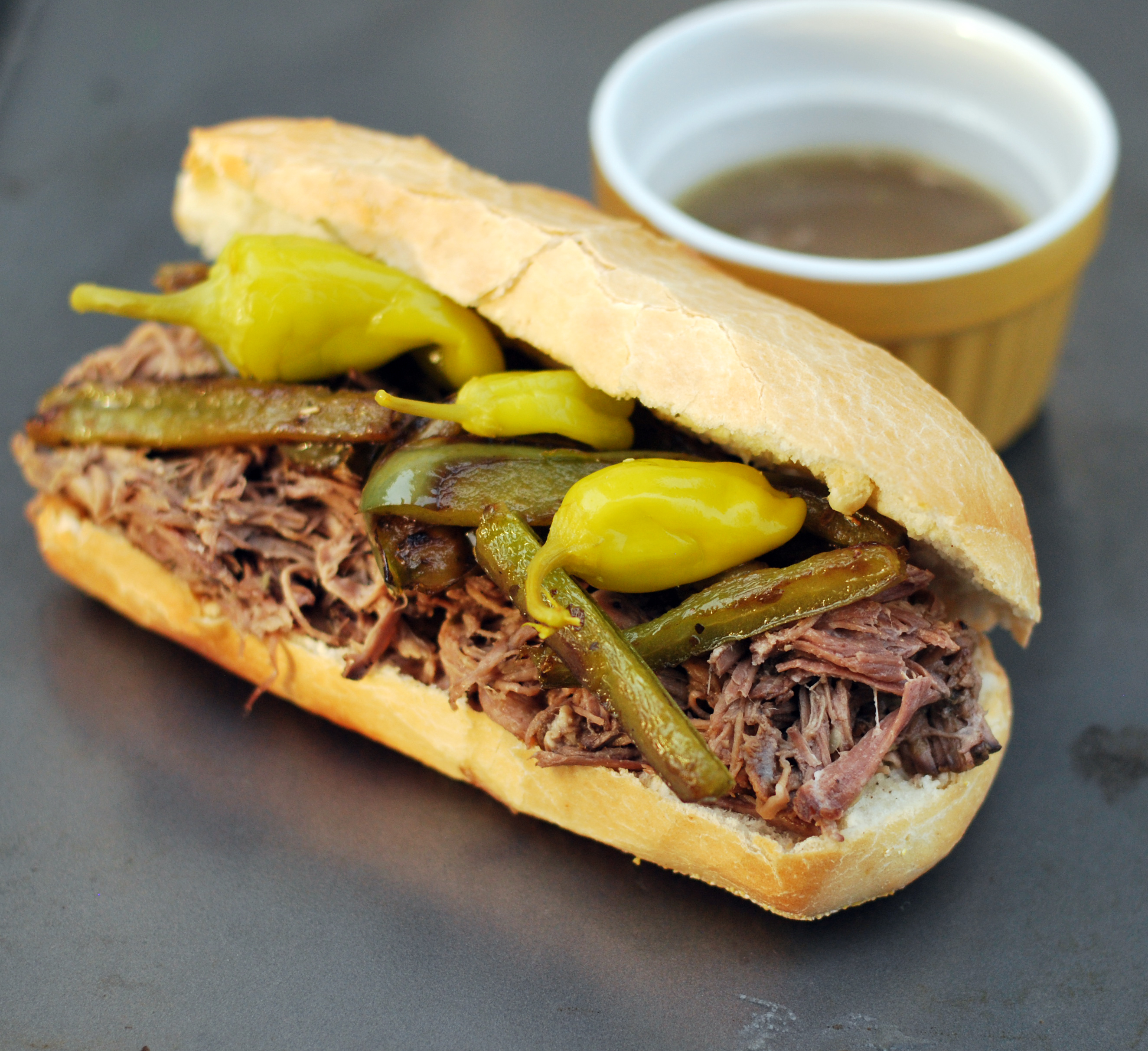
This is as close as I can come to authentic Chicago style Italian beef. It's more like a New Orleans Debris from Mother's Restaurant. But most folks like it.
- Carbohydrate 1.31755611666667 g
- Cholesterol 163.2932532 mg
- Fat 22.9754258268333 g
- Fiber 0.284436664709449 g
- Protein 46.979999034 g
- Saturated Fat 8.14879211038333 g
- Serving Size 1 1 Serving (269g)
- Sodium 196.96201435 mg
- Sugar 1.03311945195722 g
- Trans Fat 2.16697859841666 g
- Calories 412 calories
Step-by-step
- Put all ingredients except meat into a saucepan and bring just to a boil.
- Pour mixture over the meat in a slow cooker and roast on low setting for 10 to 12 hours. (or high heat for 4-5 hrs)
- Remove Bay leaf and shred meat. Or you can refrigerate the roast and slice it thin.
- Serve on Italian rolls.
- note: for extra sauce, you can add a can of beef consomme to the ingredients.
The Chemistry of Long-Term Braising
Rump roast contains substantial connective tissue that requires sustained heat to break down properly, transforming tough muscle fibers into tender strands over a ten to twelve hour window on low. Cooking the meat submerged in seasoned liquid prevents surface dehydration while rendering internal fats directly into the surrounding broth. When utilizing a slow cooker, ensure the lid remains tightly sealed to maintain the ambient steam pressure necessary for uniform collagen conversion.
Texture Control Through Temperature Management
Shredding the warm beef yields a rustic, absorbent texture that holds jus efficiently, whereas chilling the roasted joint completely solidifies the intramuscular fats, allowing a sharp slicer to produce paper-thin deli-style cuts without crumbling. Letting the cooked beef rest undisturbed for at least thirty minutes before any mechanical manipulation redistributes the internal moisture evenly throughout the roast. Warm the sliced or shredded meat gently back in its strained cooking liquid prior to assembly on crusty rolls to maximize flavor absorption.
Adapting Regional Flavor Profiles
Chicago-style iterations typically rely on dry Italian seasoning packets combined with garlic powder and dried herbs to build a punchy, savory baseline in the poaching water. Swapping the standard water base for canned beef consommé introduces an immediate depth of gelatin and umami that compensates for the dilution caused by meat juices releasing during the extended cooking cycle. Adjust the dried oregano and basil quantities carefully if substituting a homemade dressing mix, ensuring the final sodium level remains balanced against the natural saltiness of the rump cut.


