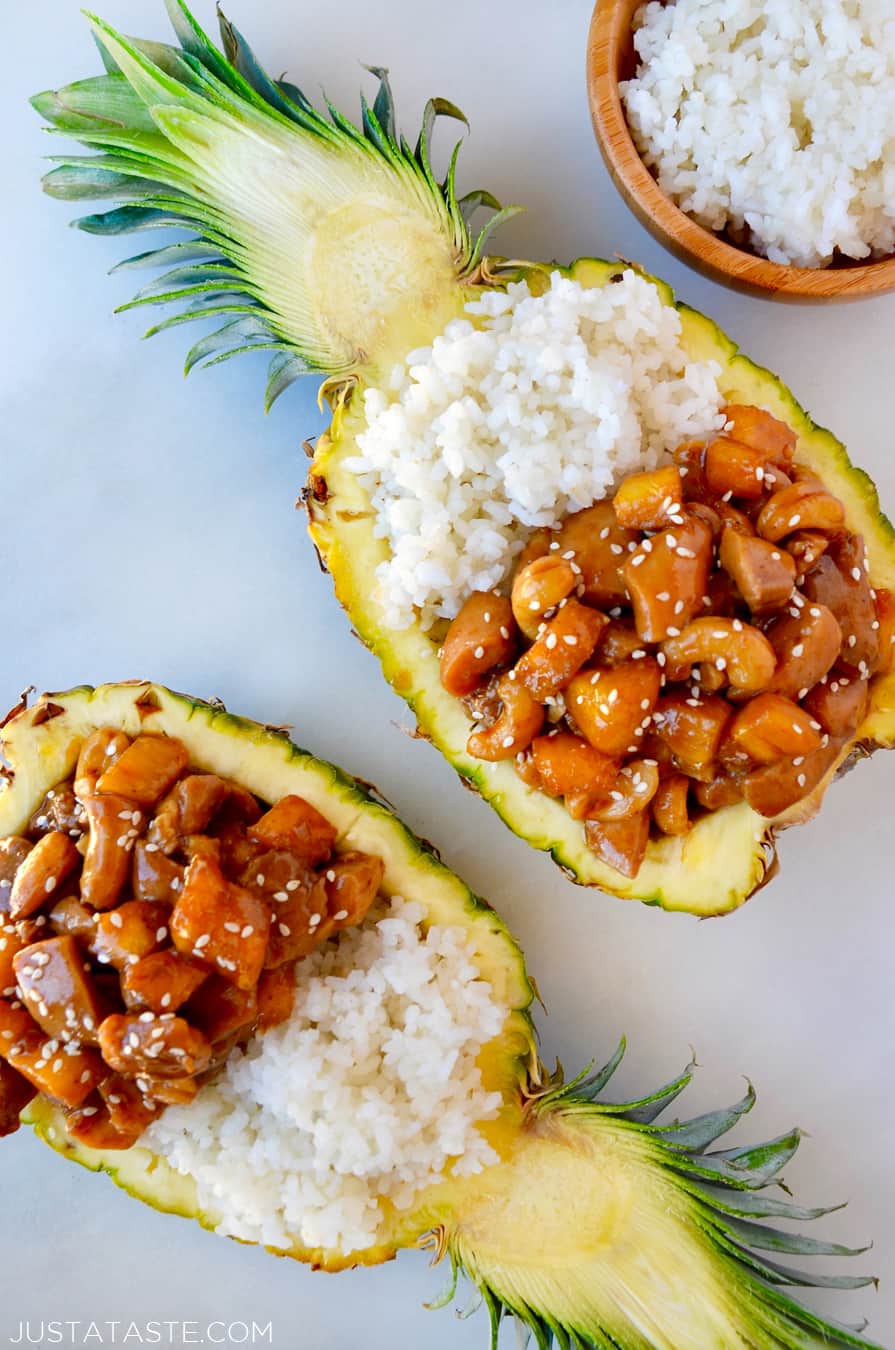
Savory Asian dish. Great over rice. Jazz it up with cashews if you like.
- pepper
- salt
- 3 tablespoons oil
- 3 tablespoons corn starch
- 6 tablespoons soy sauce
- 3 3/4 pounds chicken breasts boneless and skinless up to 4 1/2 lbs
- 4 1/2 tablespoons oil
- 1 1/2 tablespoons sherry
- 1 1/2 cups pineapple chunks drained, reserving pineapple juice
- 1 1/2 tablespoons oil
- 1 1/2 cloves garlic minced
- 3/4 cups pineapple juice previously reserved
- 3 tablespoons sherry
- Carbohydrate 17.6123687533999 g
- Cholesterol 164.4271 mg
- Fat 54.6140880821998 g
- Fiber 0.754749989301647 g
- Protein 66.3552205000951 g
- Saturated Fat 6.87113351064124 g
- Serving Size 1 1 Serving (430g)
- Sodium 438.432375000528 mg
- Sugar 16.8576187640982 g
- Trans Fat 3.38494600395805 g
- Calories 847 calories
Step-by-step
- Cut chicken into bite-size pieces.
- Combine the next 6 ingredients for maranade (cornstarch through pepper) and blend thoroughly.
- Pour over chicken pieces, cover, and refigerate for 30 minutes or longer if you prefer.
- Heat 3 tablespoons oil in a heavy skillet.
- Drain chicken, reserving marinade.
- Add chicken to skillet and brown for about 5 minutes, while stirring constantly.
- Add drained pineapple chunks.
- Cover skillet and simmer over low heat for 12 minutes.
- Remove chicken and pineapple with a slotted spoon.
- Arrange on preheated platter and keep warm.
- Add additional 1 1/2 tablespoons oil to pan drippings.
- Stir in minced garlic and cook for 5 minutes.
- Blend pineapple juice with reserved marinade and sherry.
- Pour into skillet and heat through.
- Strain sauce through sieve, spoon over chicken and pineapple and serve immediately.
Processing large volumes of boneless, skinless poultry requires a heavy-bottomed skillet to maintain thermal mass when cold protein hits hot oil. Thin aluminum pans drop 50 degrees Fahrenheit instantly upon contact with meat, causing steaming rather than the necessary Maillard browning. Cast iron or heavy clad stainless steel retains stored heat effectively, ensuring the chicken achieves proper color during its initial five-minute searing phase without sticking to the cooking surface.
Coating meat pieces in a cornstarch-based mixture protects the protein fibers from direct, aggressive heat while locking in internal moisture. This starch barrier absorbs marinade liquids, which contain soy sauce, sherry, and pepper, creating a protective gelatinous layer. When drained chicken enters the skillet, excess surface liquid must be removed to prevent premature boiling. Reserve that liquid safely; it thickens the final pan sauce once combined with pineapple juice.
Controlling moisture is critical during the twelve-minute covered simmer. Trapped steam cooks the poultry thoroughly while softening the pineapple chunks just enough to release their natural sugars into the pan. Removing the solids with a slotted spoon allows the subsequent reduction step to concentrate the flavors properly without burning the delicate garlic added later.
Straining the finished sauce through a fine-mesh sieve removes any coagulated proteins or stray minced garlic particles, resulting in a glossy, smooth coating. Pouring this liquid over the warm meat immediately prevents congealing. Serve the preparation over steamed white grain, adding toasted cashews only at service time to preserve their distinct crunch against the tender poultry.



