Luncheon Meat Quiche
Came up with this delicious, quick and easy quiche because I didn't have heavy cream or bacon available. Worked out fantastically.
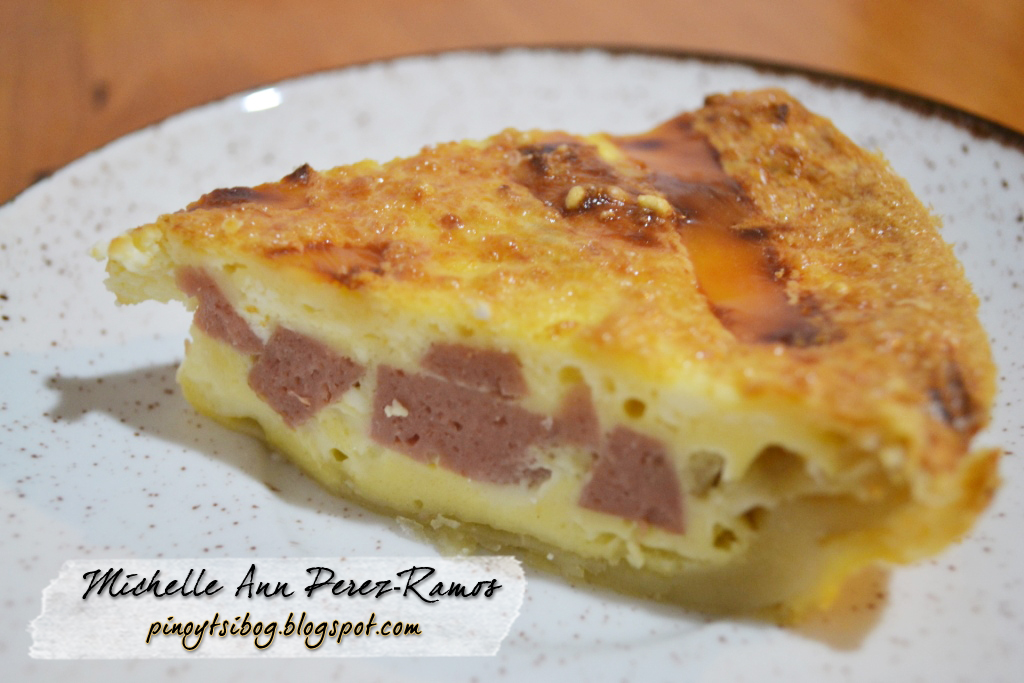
Came up with this delicious, quick and easy quiche because I didn't have heavy cream or bacon available. Worked out fantastically.
- 1/2 teaspoon salt
- 4 eggs
- 1/2 teaspoon ground black pepper
- 1/2 teaspoon nutmeg
- 1/2 teaspoon ground white pepper
- 1 1/2 cup all purpose flour
- 1/4 cup canola oil
- 1/4 cup ice water
- 1 1/4 cup whole milk
- 1/4 cup cucumber peeled and diced
- 1/5 cup onion peeled and finely chopped
- 1/4 cup baby spinach very finely chopped
- 1 cup luncheon meat or spam
- Carbohydrate 99.7358717383237 g
- Cholesterol 249.430833333333 mg
- Fat 26.2299214359647 g
- Fiber 11.1887970875999 g
- Protein 20.3501433010687 g
- Saturated Fat 3.85780857042607 g
- Serving Size 1 1 Serving (722g)
- Sodium 117.440523074985 mg
- Sugar 88.5470746507238 g
- Trans Fat 1.63832848805301 g
- Calories 704 calories
Step-by-step
- CRUST
- Combine 1cup of flour and salt in a bowl. Mix thoroughly.
- In another bowl whisk oil and water until homogenous and then add this to flour mixture while mixing with a fork until a soft dough is formed.
- Sprinkle 1/4cup of flour on a smooth clean board or surface and gently knead dough so that flour takes up some moisture from the dough. (up to 1/2cup may be ised)
- With a rolling pin gently flatten out the dough into a 1/4inch thin sheet and then spread this over the bottom and edges of a 8inch baking pan.
- Preheat oven at about 300°F or medium to high heat.
- FILLING
- In a bowl combine eggs, milk, and spices. Add 1/4cup of flour and whisk gently until mixture is smooth.
- Add chopped onions, diced cucumbers, luncheon meat, spinach and mix through and through.
- Pour filling onto the pan with the pie crust dough.
- Bake at 300° until pie crust is lightly golden and filling begins to rise then turn down the heat to low . Brown the top slightly by putting on the top burner of the oven for a few minutes.
- Total bakingntime is about 30-35min
Whisking the oil and ice water into a temporary emulsion before adding it to the flour dictates whether the pastry turns out flaky or tough. Cold liquids prevent the canola oil from melting into the flour prematurely, maintaining tiny pockets of fat that steam during baking. Whisking the eggs, whole milk, and spices thoroughly with an additional portion of flour creates a stable custard base that supports heavier mix-ins without separating in the oven. Incorporating finely chopped vegetables alongside cured meat requires careful moisture management so excess water does not compromise the set of the filling.
Avoiding Common Errors
Baking requires vigilance regarding oven temperature gradients. Preheating the baking pan to 300°F ensures the pastry begins cooking immediately upon contact, preventing grease-out. Placing the pan on the upper burner during the final minutes requires constant observation to achieve a golden top without scorching the dairy solids in the custard.
- Overworking the pastry dough develops gluten, resulting in a tough texture instead of a tender crust.
- Skipping the ice water step causes the oil to absorb into the flour too quickly, yielding a heavy, greasy base.
- Failing to reduce the oven heat when the filling begins to rise leads to overcooked, rubbery eggs.



