Yummy Cheese and Ham Scallop Potatoes
Creamy scallop cheese potatoes with ham. I mixed 2 different recipes and added ham. It was very yummy. Served with a salad, a perfect meal for 2.
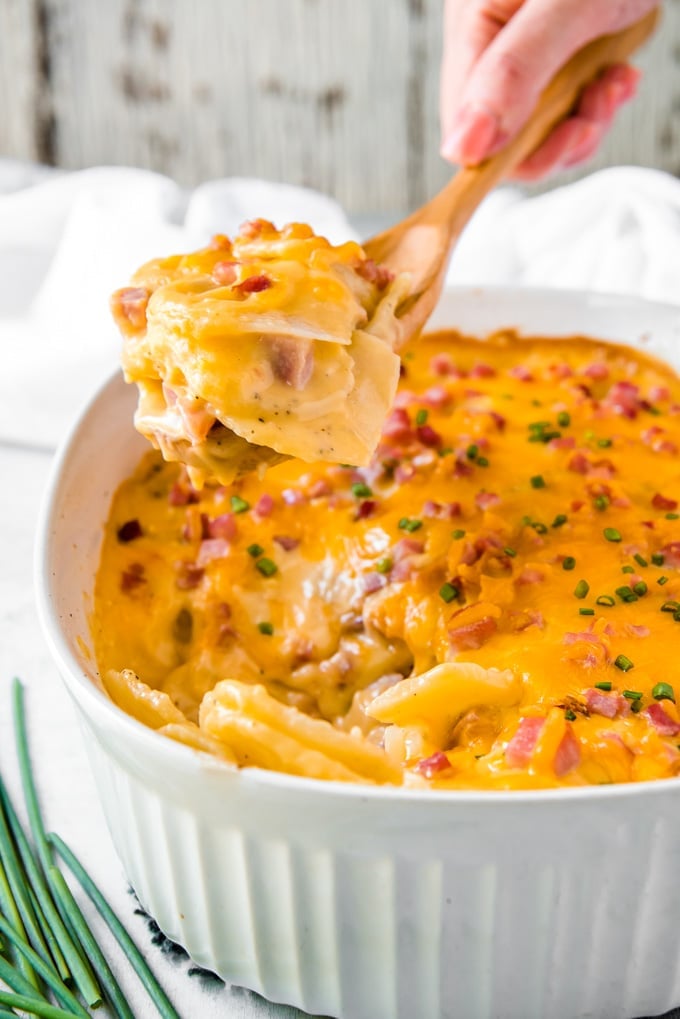
Creamy scallop cheese potatoes with ham. I mixed 2 different recipes and added ham. It was very yummy. Served with a salad, a perfect meal for 2.
- 2 tablespoons flour
- 1 1/2 cups cheddar cheese shredded
- 1/4 teaspoon ground mustard
- 1 1/2 teaspoons dried parsley
- 2 large potatoes peeled and thin sliced
- 1/2 cups sweet onion chopped
- 1/4 teaspoon seasoning blend garlic herb
- 2 cups cooked ham chopped
- 1-1 1/2 cups 2% milk warm
- 2 1/2 tablespoons flour and (seasoning blend) whisk with milk
- Carbohydrate 55.6397250042745 g
- Cholesterol 141.66000008724 mg
- Fat 37.2999000276165 g
- Fiber 5.34075008673358 g
- Protein 59.9798000209559 g
- Saturated Fat 23.0189450175522 g
- Serving Size 1 1 Serving (546g)
- Sodium 2149.60125052025 mg
- Sugar 50.2989749175409 g
- Trans Fat 0.486027501466808 g
- Calories 793 calories
Step-by-step
- Pre heat oven to 400.
- Grease a 1 1/2 -2 quart casserole dish with non stick or butter.
- Cook potatoes until slightly softened about 8 min.then drain well. They will finish cooking in the oven. While potatoes are cooking , chop onion set aside. Mix together 2 tablespoons flour with gr. mustard, parsley, and seasoning blend. (I used garlic herb) in a small bowl. In a micro safe bowl, or small pan, whisk together milk and the other 2 1/2 tablespoons of flour and season blend, and heat to just warm.
- Layer in casserole dish potatoes, onion ,ham, flour and cheese until all used, ending with cheese on top. Pour warmed milk mixture over the top. Bake for 30 - 35 min or until cheese is brown and potatoes are bubbly.
- Let sit 5 -10 minutes before serving.
Starch Gelatinization and Pre-Cooking
Boiling the sliced potatoes for eight minutes initiates starch gelatinization before the pieces enter the baking dish. Raw potato cells hold tight networks of starch granules that resist softening in purely acidic or dairy-heavy liquids alone. Partial pre-cooking breaks those rigid cellular walls down slightly, ensuring the tubers finish completely tender by the time the baking window closes. Draining the slices thoroughly prevents excess surface water from diluting the dairy sauce.
Creating the Emulsion
Whisking flour directly into warm milk creates a suspension of starch molecules that thickens the liquid as thermal energy rises inside the oven. Casein proteins present in cheddar cheese and milk interact with these starches to form a stable emulsion instead of separating into oil and solids. Ground mustard contains compounds called mucilage that act as natural emulsifiers, keeping the fats from pooling on the surface during baking at 400 degrees Fahrenheit.
Avoiding Common Pitfalls
Rushing the resting phase of five to ten minutes after baking remains the most frequent reason casseroles slide apart on the plate. Starches require time off direct heat for the liquid phase to fully set into a coherent matrix. Slicing too early causes the loose sauce to run out across the dish. Controlling moisture levels by drying the boiled potatoes and warming the milk prevents both graininess in the cheese and watery pooling at the base of the casserole.


