Creamy Italian Orzo
A delectable blend of flavors in a creamy Italian orzo dish that will tantalize your taste buds.
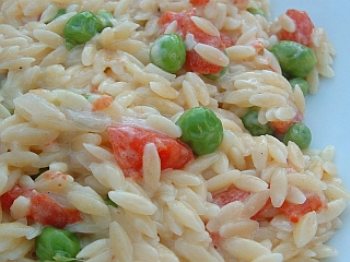
A delectable blend of flavors in a creamy Italian orzo dish that will tantalize your taste buds.
- 2 tablespoons extra virgin olive oil
- 1 pound orzo
- 8 cups low sodium chicken broth, stock, or water
- 1/2 cup shallot (2-3 large), finely chopped (or finely chopped onion)
- 2 large cloves garlic finely minced
- 1 14.5-oz can fire-roasted tomatoes diced, juices drained (i use muir glen brand)
- 1 1/4 cups heavy cream
- 1 cup frozen peas thawed
- 1 cup parmesan or romano cheese freshly grated, and more to pass
- salt and black pepper freshly ground
- 4 teaspoons pine nuts toasted, (optional)
- Carbohydrate 39.3201336397062 g
- Cholesterol 77.863741294958 mg
- Fat 14.1003855725245 g
- Fiber 1.30844999969006 g
- Protein 16.549599006572 g
- Saturated Fat 6.91796337715818 g
- Serving Size 1 1 Serving (409g)
- Sodium 791.874127035018 mg
- Sugar 38.0116836400161 g
- Trans Fat 1.18434201149208 g
- Calories 348 calories
Step-by-step
- In a large heavy saucepan, bring chicken broth or salted water to boil over high heat.
- Slowly stir in the orzo and cook uncovered, stirring often, until al dente, about 8 minutes.
- Drain, reserving 1 cup of the cooking liquid.
- Heat oil in a large heavy saute pan over medium heat.
- Add the shallots and saute about 2 minute.
- Add the garlic and saute another 1-2 minutes, or until mixture is tender and fragrant.
- Add the tomatoes and cook until tender, about 8-10 minutes.
- Stir in the cream and peas, and cook, stirring often, until cream just begins to bubble.
- Add the orzo, tossing to coat.
- Remove the skillet from the heat and add the cheese to the pasta mixture.
- Stir until the sauce coats the pasta thickly.
- If needed, add enough of the reserved cooking liquid to maintain a creamy consistency.
- Season with salt and pepper, to taste.
- Sprinkle with the toasted pine nuts, if desired.
- Serve immediately in warmed bowls along with additional cheese to pass.
Will this pasta turn into an unyielding block of starch by tomorrow? Orzo poses distinct reheating challenges because small pasta shapes continue absorbing moisture long after leaving the burner. Managing liquid retention requires specific attention to starch management and pan selection. Using a wide heavy sauté pan provides the surface area needed to reduce the cream and tomatoes evenly without scorching dairy solids.
Managing Starches and Reheating Behavior
Cream-based pasta dishes rarely improve with traditional refrigeration unless handled correctly. Orzo acts like a sponge, locking in free liquids as temperatures drop. Storing leftovers demands reserving a portion of the starchy cooking water separately in a sealed jar for up to three days. When reheating chilled portions on the stove over medium-low heat, introduce the reserved liquid gradually to loosen the starches without breaking the emulsion of the heavy cream and grated cheese. Microwaving tends to separate dairy fats from the pasta, so gentle stovetop warming in a thick-bottomed saucepan yields vastly superior textural results.Pan Selection and Temperature Control
Heavy-bottomed copper or multi-clad stainless steel cookware prevents hot spots that burn finely minced garlic and delicate shallots during the initial sauté phase. Maintain medium heat when sweating the aromatics, ensuring the shallots soften translucent without taking on brown notes that introduce bitterness into the sauce. Folding in the frozen peas at the final stage preserves their bright green color and crisp-tender bite rather than letting them turn olive-drab through over-exposure to residual heat. Toasting pine nuts in a dry skillet over medium heat for precisely three minutes releases their essential oils just before serving.


