Weber Pizza Margherita Style
This Weber Pizza is a tasty way to experience Margherita flavors on your grill. With fresh mozzarella, basil, and some easy pizza sauce, this grilled pizza is a winner
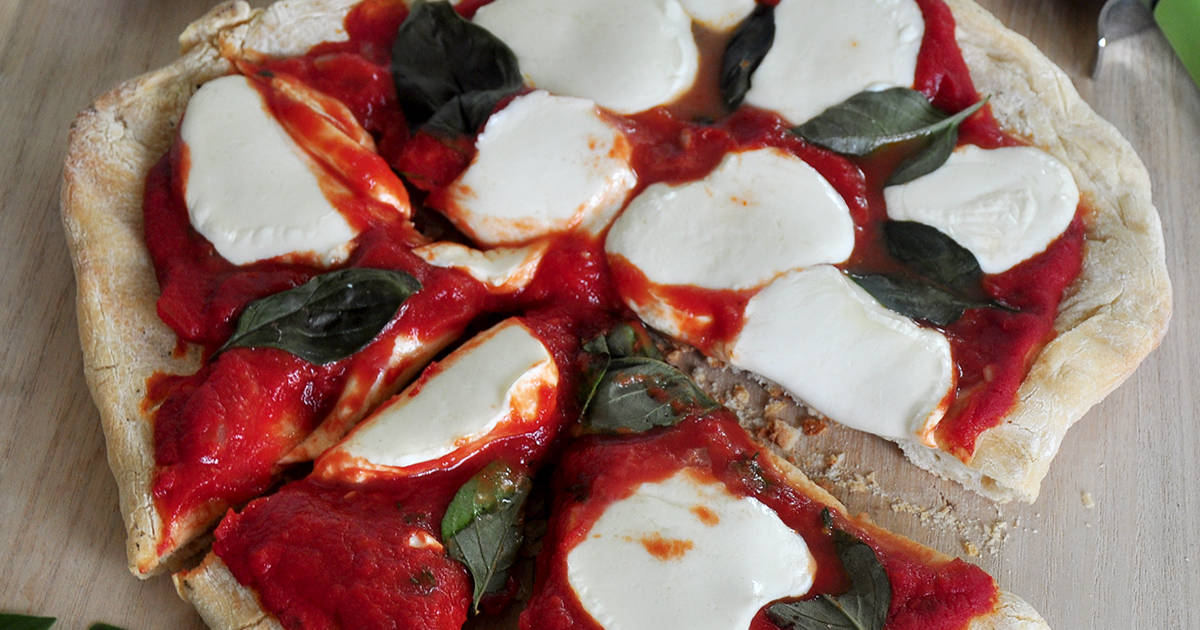
This Weber Pizza is a tasty way to experience Margherita flavors on your grill. With fresh mozzarella, basil, and some easy pizza sauce, this grilled pizza is a winner
- 2 tablespoons tomato paste
- 1 tablespoon fresh thyme
- 8 ounce can tomato sauce
- 2 cloves
- 10 grams olive oil
- 2 tablespoons of olive oil
- 5 grams salt
- 190 grams lukewarm water
- 4 grams granulated sugar
- 1 packet (7g) active dry yeast
- 311 grams bread flour (i use dakota maid)
- 2 tablespoons of minced onion
- 8 ounce ball of fresh mozzarella cheese
- 10-15 fresh basil leaves
- Carbohydrate 8.28550351414 g
- Cholesterol 36.287389568 mg
- Fat 12.5640676874644 g
- Fiber 1.62942318380114 g
- Protein 15.0383710176948 g
- Saturated Fat 6.23323479411543 g
- Serving Size 1 1 Slice (130g)
- Sodium 656.787723059258 mg
- Sugar 6.65608033033886 g
- Trans Fat 0.608216491072437 g
- Calories 202 calories
Step-by-step
- Either 1 or 2 days before making pizza, add lukewarm water and sugar to a mixing bowl
- Sprinkle yeast on top.
- Allow to sit for 5 minutes
- Add all ingredients to mixing bowl and manually stir until everything is incorporated.
- Knead by machine (or hand) until the dough is smooth. In my KitchenAid, this was approximately 5 minutes.
- Make sure it is a ball and lightly coat with oil.
- Place in a covered dish for 1-2 days.
- 3 hours before you intend on baking, take out of the refrigerator.
- Divide into two equal pizza balls. We will only be using one today. For the other, I wrap it in a freezer bag and put in a freezer.
- For the pizza ball we are using, I allowed to rise in my oven with it off, but the oven light on.
- Now, for the sauce. Add oil, thyme, onions, and garlic to a medium saucepan over medium-low heat.
- Allow garlic to soften, but nothing to burn. Turn temp down if anything starts to brown.
- Once garlic is softened and glassy, add tomato sauce and paste.
- Preheat your grill to 325 or as close as you can get it. It should not be a high temp.
- Stretch the dough as instructed in the notes.
- Once dough is stretched, add to preheated grill and close cover.
- Cook for 5 minutes.
- Flip and allow to cook for five more minutes with the cover on, but watch to make sure nothing is burning.
- Flip, add sauce first, then cheese and basil leaves.
- Allow to cook covered until cheese is melted, but the crust is not burned. Should be 10-20 minutes.
Allowing the pizza dough to cold-ferment in the refrigerator for one to two days develops complex organic acids that dramatically improve the flavor and structural extensibility of the crust, transforming simple bread flour and water into a pliable medium capable of holding up to high-heat cooking. Cooks frequently ruin grilled pizza by rushing this proofing stage or by failing to temper the dough at room temperature for three hours prior to shaping, which results in a tight, rubbery gluten network that stubbornly resists stretching and tears under tension. When cooking over a medium grill environment maintained near 325 degrees Fahrenheit, precise flipping intervals prevent the bottom from charring before the interior structure sets; missing these cues leads either to a raw, doughy center or a completely blackened exterior. Building the sauce requires sweating the minced onion, fresh thyme, and cloves over medium-low heat until translucent rather than browned, because scorched alliums impart an unpleasantly bitter acridity that overpowers the clean sweetness of the tomato paste and sauce. Chemically, the combination of heated tomato glutamates and the dairy fats in the fresh mozzarella creates a savory depth through the Maillard reaction and fat emulsion, but this delicate balance collapses if the moisture from the fresh cheese is not managed carefully during the final covered melt phase. Adding the mozzarella and fresh basil leaves only after the initial crust bakes for ten to twenty minutes prevents the basil from burning into unpalatable carbon and stops the cheese from releasing excessive whey that would otherwise saturate and ruin the crispness of the bottom crust.


