Corn Fritters
From my Mom's recipe box, written on the back of a piece of a calendar page. I grew up loving these!
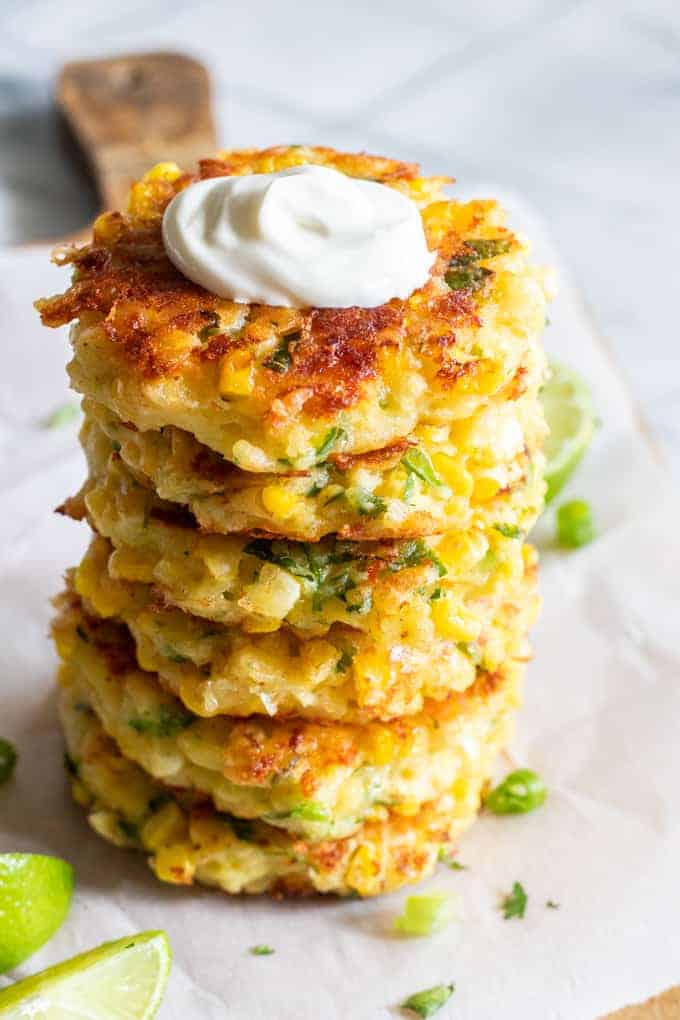
From my Mom's recipe box, written on the back of a piece of a calendar page. I grew up loving these!
- Carbohydrate 41.5644033462351 g
- Cholesterol 124.08 mg
- Fat 3.98135333349902 g
- Fiber 3.81016675327174 g
- Protein 9.11178333507983 g
- Saturated Fat 1.08368000002621 g
- Serving Size 1 1 Serving (212g)
- Sodium 61.6413333336715 mg
- Sugar 37.7542365929633 g
- Trans Fat 0.629133333388281 g
- Calories 223 calories
Step-by-step
- Add the corn, salt, pepper, flour and egg yolks to a bowl and mix well.
- Beat the egg whites until stiff and fold into the corn and flour mixture.
- Drop into hot oil and fry until done inside.
Standard recipes rarely warn that whole kernel corn releases trapped internal moisture upon contact with hot fat, creating miniature splatter hazards unless drained thoroughly in a mesh colander for five minutes beforehand. Achieving structural integrity depends entirely on mechanical aeration. Egg whites must be whipped past soft peaks until stiff peaks hold their shape without sliding when the bowl is inverted. Folding that foam gently into the batter preserves microscopic air pockets that expand over moderate heat. Maintaining oil temperature precisely near 375 degrees Fahrenheit prevents outer scorching while ensuring the center solidifies.
Judging Doneness Visually
Visual cues dictate removal time since internal probes cannot measure thin patties accurately. Golden-brown edges indicate caramelization of the flour and natural corn sugars, signaling readiness to flip after roughly two to three minutes. Bubbling around the fritter perimeter should slow down noticeably as water evaporates from the batter matrix. Draining batches immediately on a wire rack rather than paper towels maintains crisp bottom crusts by preventing steam condensation.
- Raw centers happen when oil exceeds 400 degrees Fahrenheit, burning the exterior before conduction cooks the middle.
- Soggy textures occur if canned corn retains excess liquid prior to mixing.
- Fresh sweet corn cut straight from the cob introduces less initial moisture than canned varieties, requiring a tablespoon of water if the batter feels overly stiff.


