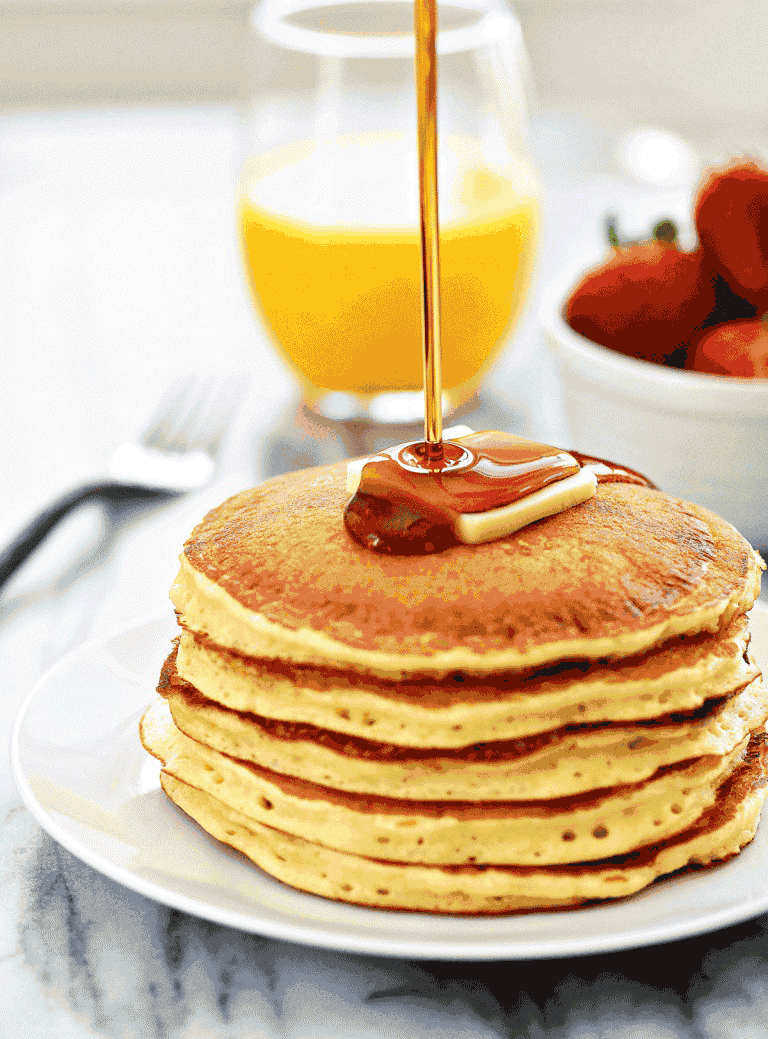
Basic pancake recipe
- Carbohydrate 35.8936295833333 g
- Cholesterol 107.59 mg
- Fat 24.5144775 g
- Fiber 1.1662291846176 g
- Protein 5.56287708333333 g
- Saturated Fat 14.9930395 g
- Serving Size 1 1 Serving (128g)
- Sodium 364.1515 mg
- Sugar 34.7274003987157 g
- Trans Fat 1.91858449999999 g
- Calories 383 calories
Step-by-step
- Mix milk, egg and melted butter.
- Add dry ingredients and stir with a fork.
- Cook on non-stick surface on medium heat.
- Flip pancakes when bubbles appear and remain as small hole in pancake.
- Add your favorite syrup, powdered sugar, cinnamon or fruit topping.
Unlike crêpes, which rely on a very thin, unleavened batter spread across a wide flat surface, American-style pancakes depend on chemical leaveners to achieve their characteristic height and fluffiness. Managing that rise requires precise physical handling, particularly when working in a compact kitchen with limited counter space and standard cookware.
- Stir the batter exclusively with a fork rather than a whisk to prevent overworking the gluten strands, which guarantees a tender crumb instead of a tough, rubbery texture.
- Watch for the specific visual cue of bubbles rising through the surface and remaining open as small holes before flipping, indicating the underside is golden brown and structured enough to turn.
- Regulate burner temperature carefully on a medium setting; too much heat burns the exterior butter before the interior sets, while too little heat yields a pale, dry cake.
- Substitute whole milk with a 1:1 ratio of plant-based milk combined with one teaspoon of lemon juice or white vinegar if dairy restrictions require an alternative.
Mastering this simple technique requires only a reliable non-stick skillet and precise timing. Proper batter rest and temperature control yield consistent results batch after batch.



