Beef and Vegetable Soup
I take my slow cooker on camping trips, set up this soup before we leave for the day and return to the campsite to a hot meal.
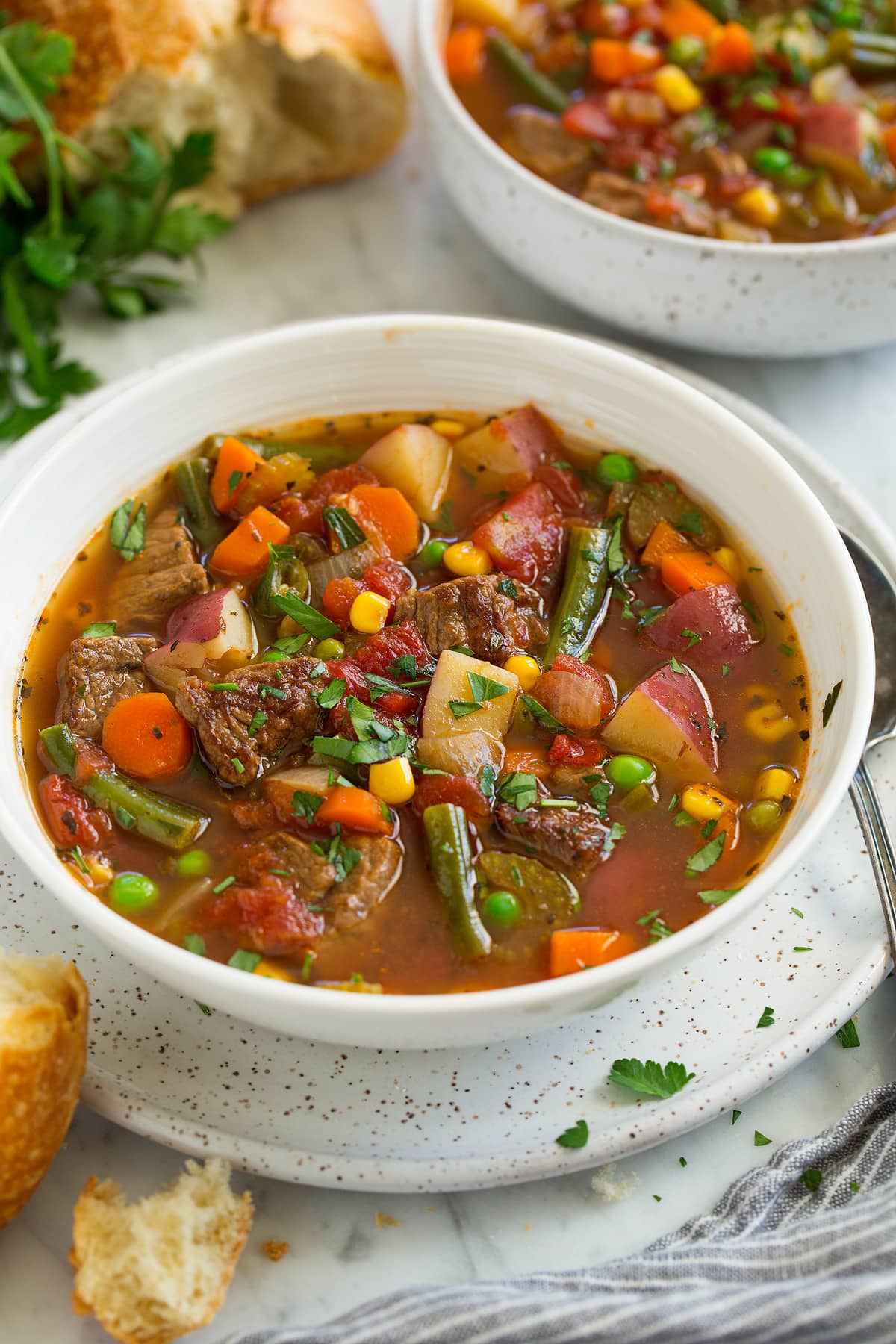
I take my slow cooker on camping trips, set up this soup before we leave for the day and return to the campsite to a hot meal.
- Carbohydrate 9.5566 g
- Cholesterol 106.59420695 mg
- Fat 29.1949951135 g
- Fiber 2.84 g
- Protein 48.403925555 g
- Saturated Fat 11.69742040495 g
- Serving Size 1 1 Serving (298g)
- Sodium 151.3040162 mg
- Sugar 6.7166 g
- Trans Fat 3.875576671 g
- Calories 501 calories
Step-by-step
- Place all ingrediants in slow cooker and cook on low for 10 hours or high for 4-5 hours.
Vegetable juice acts as the primary liquid medium, introducing natural glutamates and pervasive acidity that chemically break down tough muscle fibers during extended thermal processing. Because store-bought vegetable beverages contain varying levels of sodium and organic acids, monitoring the salt balance before the final hour of simmering prevents over-concentration as moisture slowly escapes the vessel. Slow cooking relies on sustained low heat, typically operating between 180 and 200 degrees Fahrenheit, which gently denatures collagen into gelatin without seizing the protein strands into rubbery pellets.
Cubed chuck or round cut into uniform one-inch dice ensures thermal energy penetrates the center of every piece at an identical rate. As the temperature rises past 140 degrees Fahrenheit, myofibrillar proteins contract and squeeze out moisture, requiring that surrounding liquid to maintain hydration so the meat ultimately reaches a tender threshold. Tough cuts transform entirely when held in this moist thermal environment for at least eight hours, allowing tough connective tissue to dissolve completely into the broth.
Frozen mixed vegetables introduce a secondary textural challenge because their cell walls have already ruptured during the initial blanching and freezing process. Adding them too early in a ten-hour cooking cycle turns carrots, peas, and green beans into mush, destroying their structural integrity completely. Introducing delicate produce during the final stages preserves a distinct bite, contrasting pleasantly against the yielding texture of the thoroughly braised beef chunks.
Liquid volume management dictates the final viscosity of the broth, which thickens naturally as collagen leaches from the meat into the surrounding vegetable juice. Simmering with the lid tightly sealed traps evaporated moisture, ensuring that the ratio of solids to liquid remains stable throughout the entire duration of the cook. Leftovers store safely in an airtight container at or below 40 degrees Fahrenheit for up to four days, though the starch content in certain vegetables may absorb additional liquid during refrigeration.



