Hummus Dip Two Ways: Regular and Sundried Tomato
Admitting using canned chickpeas for this recipe and sharing the joy of taking a break from hard work and doing something simple.
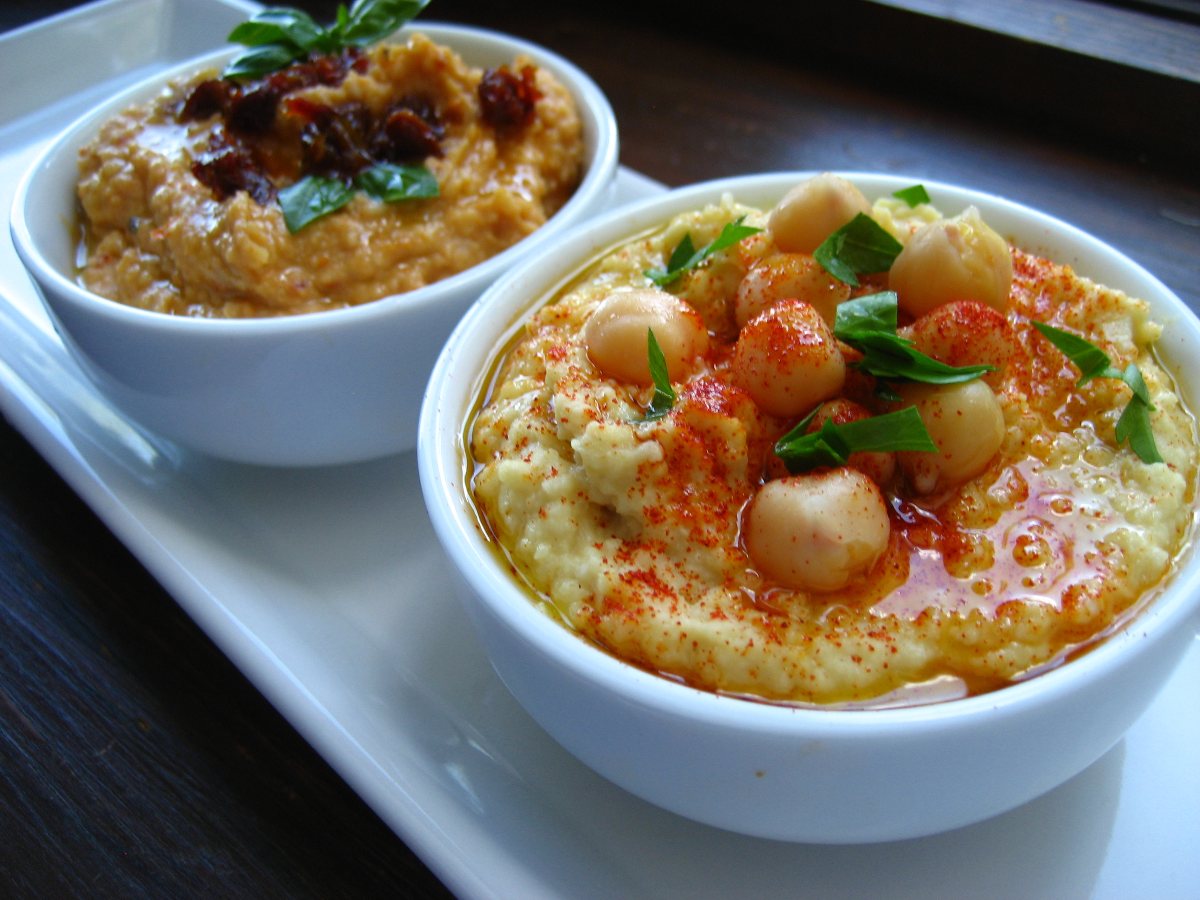
Admitting using canned chickpeas for this recipe and sharing the joy of taking a break from hard work and doing something simple.
- Carbohydrate 16.8470933337992 g
- Cholesterol 0 mg
- Fat 42.1717952819771 g
- Fiber 3.2740417294318 g
- Protein 4.35638583336209 g
- Saturated Fat 5.80151557980192 g
- Serving Size 1 1 Serving (113g)
- Sodium 235.205448973816 mg
- Sugar 13.5730516043674 g
- Trans Fat 1.34671174184658 g
- Calories 454 calories
Step-by-step
- Drain and rinse the chickpeas. Reserve about 1 TBS of chickpeas for garnish.
- Add chickpeas to a food processor.
- Slice garlic(or use a garlic press) and add to chickpeas.
- I added 2 TBS of sesame seeds, but if you have tahini use that instead.
- Add the cumin and a pinch or two of kosher salt.
- Process till fine.
- Add lemon juice and pulse a few times.
- Adjust seasoning.
- With the motor running add about 2-4 TBS oil.
- It is at this point, that you can divide the dip in half.
- If you want to make the sundried tomato kind, take out half of the mixture and set it aside. Otherwise, just leave it all in the food processor and proceed to the next step.
- With the other half that is still in the food processor, adjust the seasoning.
- If it still is not thin enough, add some water(about 1 TBS at a time)while the motor is running till you reach your desired consistency.....
- Remove from the food processor and place in a bowl.
- Place some reserved chickpeas on top, sprinkle with some paprika, and drizzle some olive oil.
- Top with some chopped parsley.
- Use the other half of the hummus (that you reserved) and place it back in the food processor.
- Add about 1 TBS sundried tomatoes and process till fine.
- Add some water to thin it out....if you need to.
- Adjust seasoning.
- Place in another bowl and top with chopped sundried tomatoes and drizzle some olive oil.
- Place a sprig or two of basil as a garnish.
Substituting sesame seeds directly for tahini alters the emulsion dynamics, requiring extra oil or water to achieve the desired silky mouthfeel because whole seeds lack the pre-released oils found in prepared sesame paste. Processing the garlic and drained chickpeas first breaks down the cellular walls of the legumes before fats or acids are introduced, yielding a noticeably finer particle size. While raw garlic can taste overwhelmingly sharp when freshly minced, letting it sit briefly with the lemon juice mellows the harsh sulfur compounds through a mild acid reaction. Operating a food processor continuously while drizzling in two to four tablespoons of extra virgin olive oil creates a stable oil-in-water suspension, transforming the thick chickpea puree into a glossy dip.
Assessing texture visually replaces any need for a thermometer or strict timing mechanism, requiring the home cook to look for ribbons that fold smoothly against the bowl of the machine without tearing. If the mixture appears too heavy or dense during processing, adding cold water one tablespoon at a time lowers the viscosity immediately without masking the underlying nutty flavor profile. Thoroughly scraping down the sides of the bowl between pulses ensures that stray pieces of garlic and chickpea skin do not compromise the velvety consistency. Recognizing when the emulsion is complete relies on observing a pale, uniform color and a soft, spreadable peak that holds its shape slightly when spooned.
Dividing the batch halfway allows for seamless flavor variation, incorporating one tablespoon of sundried tomatoes into the second portion without requiring a second complete setup. The tomatoes introduce additional moisture and concentrated glutamates, which means the second variation may require slightly less added water to achieve the correct flow. Pulsing the tomatoes until thoroughly integrated distributes the chewy pieces evenly throughout the chickpea base, ensuring every bite carries a balanced ratio of fruit to legume. Garnish choices such as chopped flat leaf parsley, fresh basil, and a dusting of paprika add visual contrast while contributing fresh aromatic top notes to the rich base.
Storing leftover hummus safely requires transferring the dip to an airtight container and pressing a layer of plastic wrap directly onto the surface to prevent oxidation and crusting. Properly sealed dips remain fresh in the refrigerator for up to four days, though the garlic flavor will intensify slightly over the first twenty-four hours. Freezing hummus is technically possible for up to one month, but the emulsion tends to break upon thawing, releasing excess oil and altering the smooth mouthfeel. Whisking in a fresh splash of lemon juice or cold water after thawing can sometimes revive a separated batch, but preparing it fresh yields vastly superior results.



