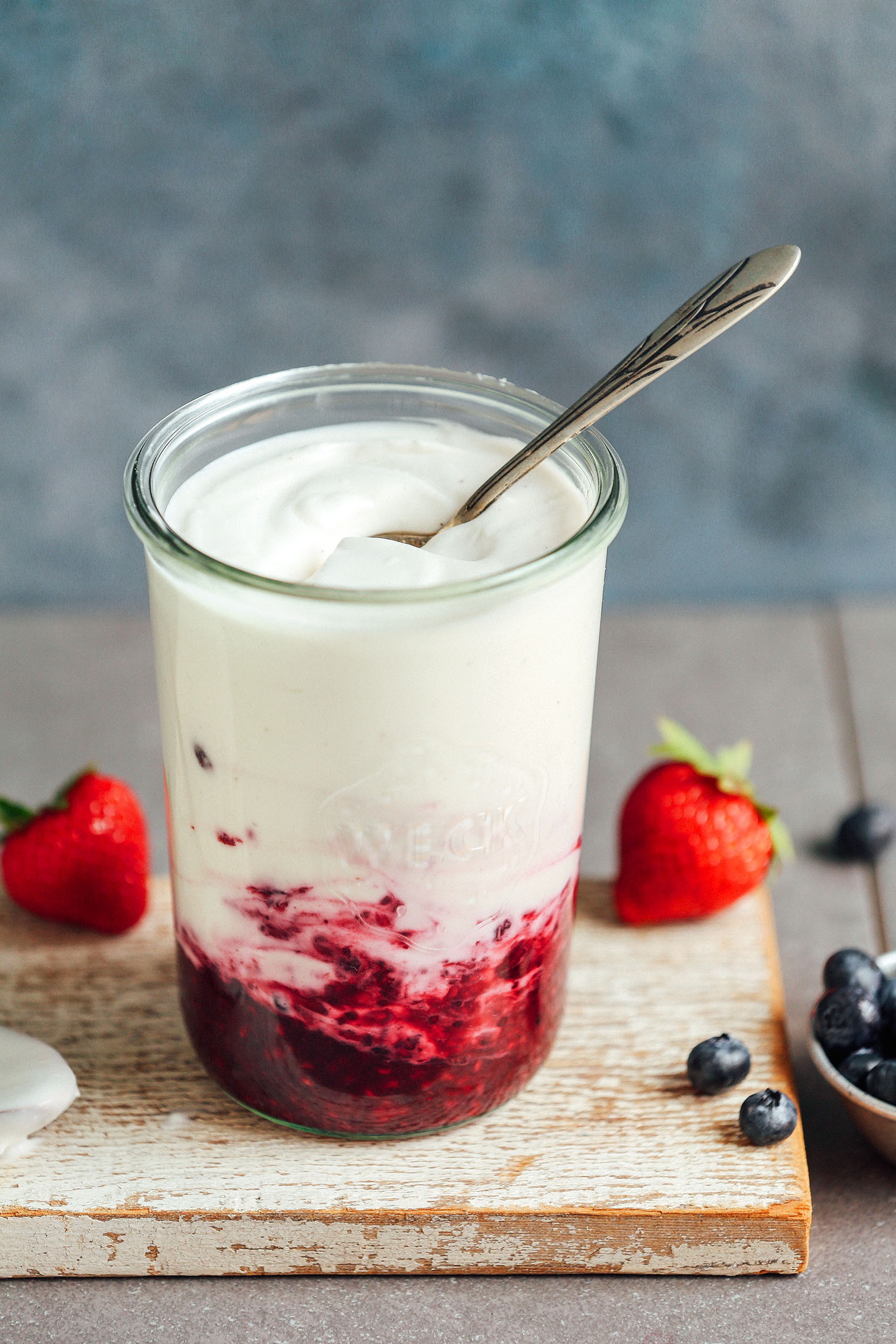
This is a recipe for making homemade yogurt. I suggest using a yogurt maker.
- Carbohydrate 8.72543333333333 g
- Cholesterol 1.02 mg
- Fat 0.0408 g
- Fiber 0.0140000002086163 g
- Protein 2.01 g
- Saturated Fat 0.0266333333333333 g
- Serving Size 1 1 Serving (162g)
- Sodium 31.39 mg
- Sugar 8.71143333312472 g
- Trans Fat 0.0017 g
- Calories 42 calories
Step-by-step
- Put the yogurt out and allow it to come to room temperature.
- Wisk to combine all ingredients except the yogurt.
- Heat to 120 Deg F.
- Pour mixture into a bowl and then wisk some of the mixture into the yogurt and then transfer the yogurt back to the bowl.
- Pour into cups supplied with the yogurt maker and allow it to culture overnight.
The Culture and Milk Base
Plain live culture yogurt supplies the necessary Lactobacillus bacteria required to acidify the milk and create the characteristic gel structure. Incorporating powdered milk alongside the fluid dairy increases the total solids in the mix, yielding a thicker final product without requiring manual straining through cheesecloth. Whisking these dry elements thoroughly before applying heat ensures that milk proteins hydrate evenly and prevent clumping.Thermal Control
Heating the liquid mixture precisely to 120 degrees Fahrenheit creates the optimal thermal environment for bacterial inoculation without denaturing the whey proteins destructively. Pouring a small amount of the warm dairy into the room-temperature starter yogurt first equalizes the temperature gradually, preventing thermal shock that can kill off active cultures before fermentation begins. Maintaining this stable warmth allows the microbial action to proceed overnight within the specific temperature range required by standard yogurt maker appliances.Common Pitfalls
Overheating the milk beyond recommended thresholds remains the primary cause of dead cultures and runny liquid output. Neglecting to let the starter yogurt warm up beforehand creates cold pockets that inhibit uniform bacterial multiplication.


