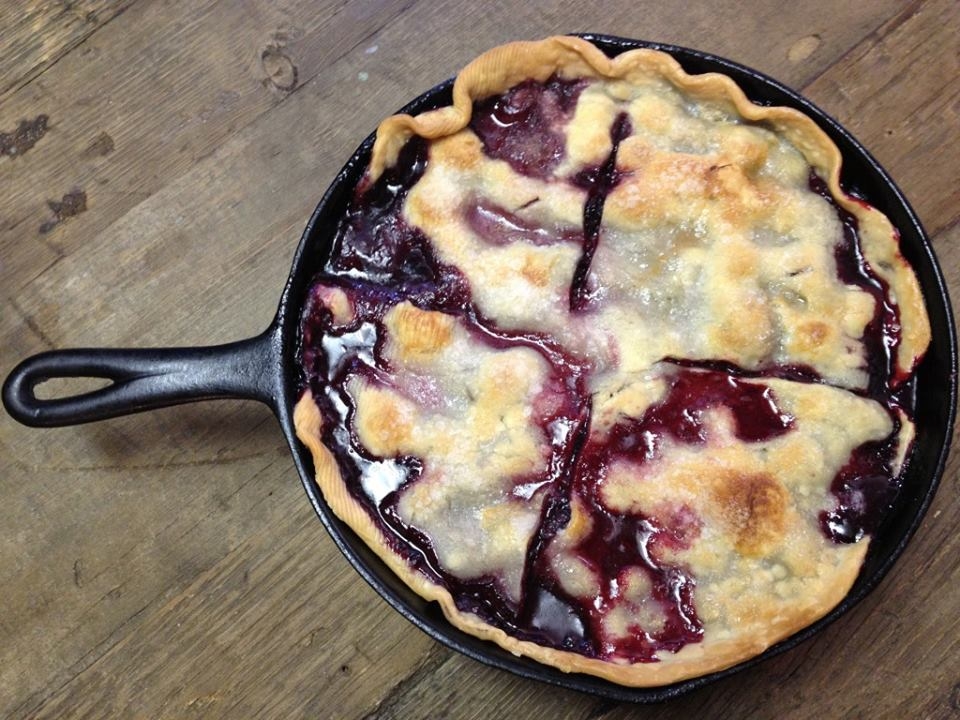
Try this Skillet Blackberry Cobbler recipe, or contribute your own.
- Carbohydrate 0.0678 g
- Cholesterol 242.95 mg
- Fat 91.6543 g
- Fiber 0 g
- Protein 0.9605 g
- Saturated Fat 58.04584 g
- Serving Size 1 1 (113g)
- Sodium 12.43 mg
- Sugar 0.0678 g
- Trans Fat 6.41614 g
- Calories 810 calories
Step-by-step
- Heat oven to 350 degrees.
- Unroll one pie crust and place in bottom and up sides of 12 â cast iron skillet.
- Pierce bottom and sides of crust with a fork.
- Bake 7 minutes; remove from oven.
- Increase oven temp to 400 degrees.
- In a large bowl, mix melted butter, 1? cups sugar, and flour.
- Put berries in bowl with butter/sugar/flour mixture; toss until berries are covered and mixture is crumbly.
- Gently pour berries into skillet; sprinkle water over berries.
- Unroll second pie crust over top of berries, sealing at the edges of the skillet.
- Scatter the small pieces of butter on top of the crust.
- Sprinkle ¾ cups sugar on top of crust.
- Cut tiny slits in top of pie crust.
- Bake approximately 45 minutes or until bubbly at edges and beginning to brown on top.
- (I highly recommend a pie shield to keep edges of crust from burning.)
Deep purple fruit juices bubble up through a crisp, golden lattice while melting butter creates a rich pastry base in this traditional cast iron dessert. Using frozen blackberries requires careful attention to moisture control, because excess liquid from thawing berries can easily transform a flaky crust into a heavy paste if not properly bound with flour and sugar. Cast iron distributes heat evenly, allowing the bottom crust to undergo a blind bake at 350 degrees Fahrenheit for seven minutes before the filling goes in, which creates an essential barrier against soggy pastry. Bakers should never skip piercing the unbaked dough with a fork prior to this initial heat exposure, as steam must escape freely to prevent large pockets from forming. Blackberries contain high amounts of natural pectin, a structural carbohydrate that thickens the juices as the temperature rises to 400 degrees Fahrenheit during the final forty-five-minute bake. While modern variations often use baking powder doughs, early American adaptations frequently relied on pie pastry wrappers to encase available wild berries over open hearths. Placing a foil pie shield over the edges midway through baking prevents the butter-and-sugar-topped rim from scorching before the center reaches a rolling boil.


