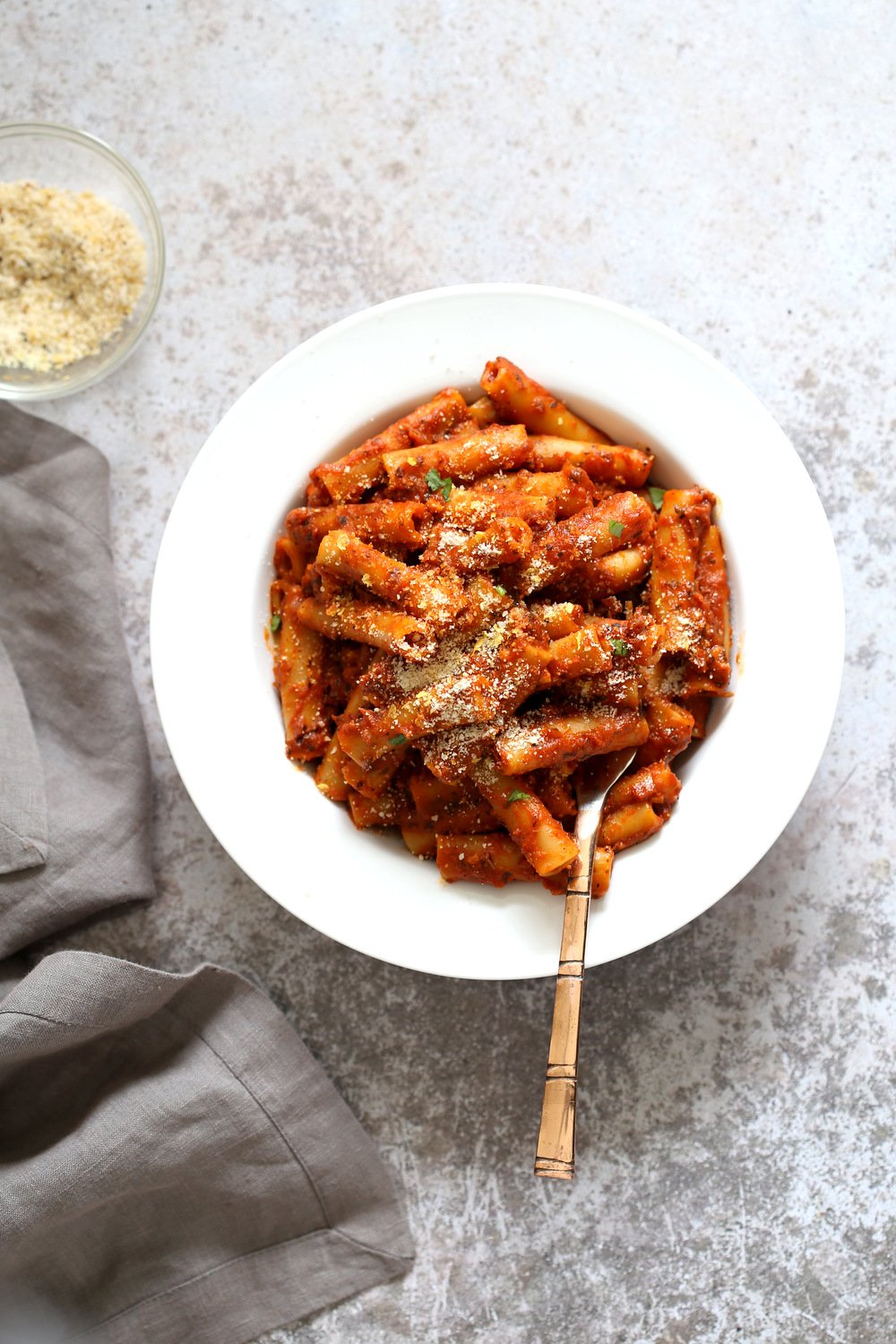
Try this Quick Meal Pasta Susanna recipe.
- Carbohydrate 60.4632 g
- Cholesterol 0 mg
- Fat 1.8878 g
- Fiber 15.4130000543594 g
- Protein 12.626 g
- Saturated Fat 0.36769 g
- Serving Size 1 1 Serving (832g)
- Sodium 1105.29 mg
- Sugar 45.0501999456406 g
- Trans Fat 0.56767 g
- Calories 277 calories
Step-by-step
- In large non-stick skillet, saute onions & mushrooms & garlic.
- After a while, add spinach if frozen.
- Wait until spinach thaws, then add your other veggies.
- You may want to add some veggie broth.
- Before theyre quite done, add 1 can (more if you like tomatoes, or if youre feeding lots (3 or more) people) of diced tomatoes with their sauce.
- Stir until tomatoes start to warm up, then add the cooked pasta.
- Stir all together.
- Spice as desired.
- (Basil, oregano, and dill is good.)
- Dont forget freshly ground pepper.
Standard marinara dishes rely on long-simmered, smooth purees that coat heavy noodles uniformly, but this vegetable-forward preparation treats produce and starch as equal partners. Achieving the right texture relies entirely on managing moisture release during the initial sauté. When moisture is controlled correctly, vegetables caramelize slightly rather than steam in their own liquids, creating a concentrated base for the canned tomatoes.
Managing Moisture in the Skillet
Start by sweating onions, mushrooms, and garlic in a large non-stick skillet over medium-high heat. Mushrooms release approximately 90 percent of their water content when initially exposed to heat; allow this liquid to evaporate completely before introducing additional components. If using frozen spinach, thaw and press out excess liquid in a mesh strainer prior to adding it to the pan, preventing excess water from diluting the flavor compounds. Introduce denser vegetables like bell peppers, zucchini, and broccoli only after the mushrooms brown, ensuring uniform tenderness across all varieties within the 30-minute preparation window.
The Role of Fresh Versus Preserved Ingredients
Canned diced tomatoes provide an immediate, consistent sauce base with built-in liquid that eliminates the need for heavy fats or oils. Swapping them for fresh raw tomatoes requires adjusting the cooking time upward by 10 to 15 minutes to allow natural fruit juices to reduce properly. Dried herbs such as basil, oregano, and dill should be added directly to the warm tomato and vegetable mixture to bloom their essential oils in the remaining moisture before the cooked pasta enters the pan.



