Russian Borscht (Beet Soup)
I felt I had to do a bit of research before I tackled this next blog. Then, I almost gave up when I found out how many different kinds of Borscht there actually are. Borscht with beef, Borscht without beef, Borscht with Kvas, Borscht with chicken... phew! How do you know which one is authentic? So, I decided that I'd combine what knowledge I had and make up my own recipe. I started with a basic Russian version, which traditionally has no meat, and decided to add a bit of a French twist to it by incorporating a mirepoix into the base of the soup. This was truly an adventure. Enjoy!
I felt I had to do a bit of research before I tackled this next blog. Then, I almost gave up when I found out how many different kinds of Borscht there actually are. Borscht with beef, Borscht without beef, Borscht with Kvas, Borscht with chicken... phew! How do you know which one is authentic? So, I decided that I'd combine what knowledge I had and make up my own recipe. I started with a basic Russian version, which traditionally has no meat, and decided to add a bit of a French twist to it by incorporating a mirepoix into the base of the soup. This was truly an adventure. Enjoy!
- Carbohydrate 64.61707125 g
- Cholesterol 7.6325 mg
- Fat 3.91765375 g
- Fiber 17.8360875390768 g
- Protein 10.888315 g
- Saturated Fat 2.1016265 g
- Serving Size 1 1 Serving (898g)
- Sodium 236.03575 mg
- Sugar 46.7809837109232 g
- Trans Fat 0.516546624999999 g
- Calories 307 calories
Step-by-step
- After chopping the potatoes and beets, boil them in the quart of water for 45-60 minutes, until they are tender. You can then move on to prep your other ingredients. Go ahead and dice your onion, carrots, celery, tomatoes, and shred your cabbage. Be sure to keep them all separate because you will be adding them at different times.
- Once the vegetables have all been cut and the beets are halfway cooked, you can start your soup.
- Sweat the onions in butter and a touch of salt until they are translucent.
- Add the celery.
- Add the carrot.
- Mix and cook until the celery and carrot are tender.
- Add tomato paste and caramelize until everything is well blended and the paste starts to stick to the bottom of the pot.
- Deglaze with half of the beet water and stir until the bottom of the pot is clean. Cook about 10 more minutes.
- Add the cabbage.
- Add the tomatoes.
- Add the cider vinegar and brown sugar. Cook for 3 minutes.
- Add the beets, potatoes, and the rest of the beet water.
- Stir and cook until beets and potatoes are fully cooked and tender.
- Change consistency to your liking. I used an immersion blender to coarsely puree the soup. Some people like it chunky so this part is completely up to you. Be sure to adjust your seasonings at this point.
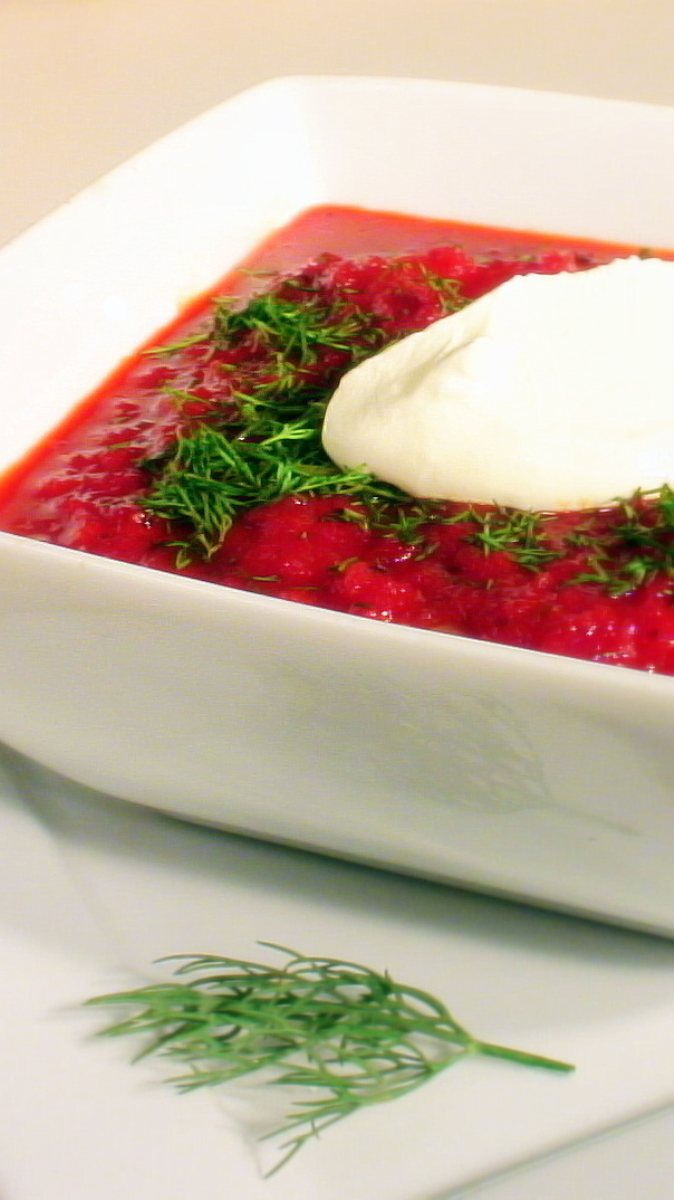
- Plate your soup and garnish with a dollop of sour cream and sprigs of fresh dill weed.
Beets drive this entire dish, providing both the deep earthy foundation and the striking crimson color that defines the bowl. Treating them correctly determines whether the soup tastes vibrant or muddy. Boil the roots gently in water for 45 to 60 minutes until a paring knife slides completely through the center without resistance. Undercooked beets retain a woody crunch that boiling cannot fix later.
Layering the Aromatics and Tomato Paste
Building flavor in stages prevents scorching and ensures each vegetable reaches proper tenderness. Sweat the diced onions in butter with a pinch of salt until translucent, then add the celery and carrots. Cooking these aromatics before introducing moisture allows their natural sugars to concentrate. Stir in the tomato paste and cook it until the bright red color deepens to a rust hue and the paste sticks slightly to the bottom of the pot. Caramelizing tomato paste removes its harsh raw acidity and builds savory depth. Deglaze the pan with reserved beet cooking liquid, scraping up every browned bit. Vinegar and brown sugar added afterward balance the natural earthiness of the root vegetables with sharp and sweet notes.
Texture and Blending Techniques
Decide on the final texture before serving. An immersion blender yields a smooth, velvety broth, while leaving the pot unblended preserves the distinct bite of shredded cabbage and chunky potatoes. Adjust the salt and pepper only after all components combine and simmer together. Ladle the hot soup into bowls and top each portion with cold sour cream and fresh dill. Leftovers keep well in the refrigerator for up to four days. The flavors actually meld and improve overnight as the starches settle and the acidity mellows into the beets.


