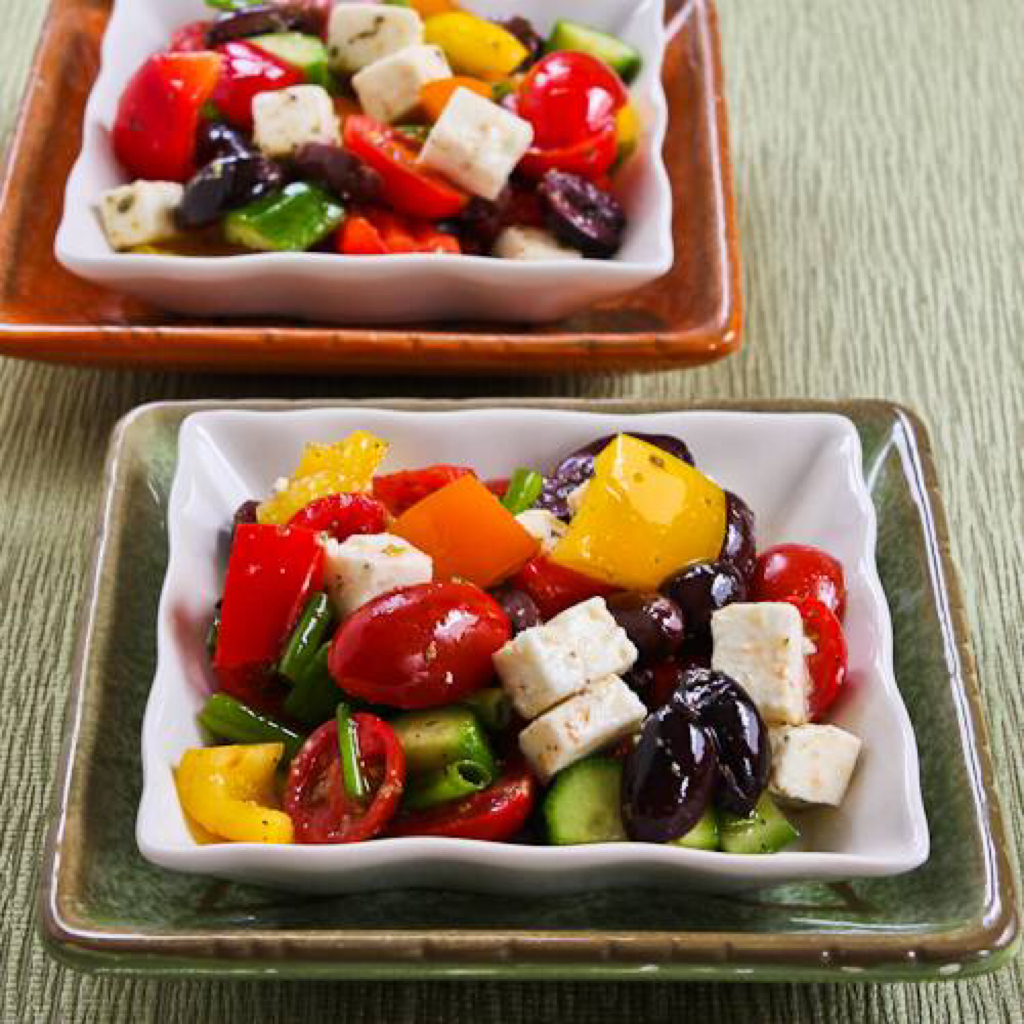
Try this Greek Salad recipe, or contribute your own
- 1 tsp. dried oregano
- 1/2 red bell pepper
- 1 cup grape tomatoes cut in half lengthwise (or use diced fresh garden tomatoes)
- 3 small cucumber
- 1/2 yellow bell pepper
- 1/2 orange bell pepper
- 1/2 cup kalamata olives cut in half (i use pitted olives)
- 1/4 cup sliced green onion (optional)
- 1/2 cup diced feta cheese (or more)
- 1/2 cup newman’s own olive oil and vinegar dressing
- Carbohydrate 58.16947 g
- Cholesterol 0 mg
- Fat 9.03736 g
- Fiber 11.3769000020027 g
- Protein 10.19423 g
- Saturated Fat 1.400435 g
- Serving Size 1 1 (1365g)
- Sodium 617.594 mg
- Sugar 46.7925699979973 g
- Trans Fat 1.176592 g
- Calories 308 calories
Step-by-step
- Mix oregano into salad dressing, set aside.
- Cut tomatoes in half lengthwise, or dice garden tomatoes. Peel cucumber in strips, leaving some green stripes lengthwise. (For small garden cucumbers or Persian cucumbers you may not need to peel.)
- Cut cucumbers in half lengthwise, then in slices. Remove seeds from peppers and dice peppers in 3/4 inch square pieces.Dice red onion or cut green onion into 1 inch long pieces. Drain olives and cut in half lengthwise. Cut Feta into cubes about 1/2 inch square.
- Combine tomatoes, cucumbers, peppers, onions, and olives and toss with desired amount of salad dressing. (You may not need all the dressing.) Stir feta cubes into salad and season with fresh-ground black pepper. The salad can be served immediately, but I like it best when the ingredients can marinate for an hour or two.
Unlike a standard American green salad built upon leafy bases like romaine or iceberg, a traditional Greek salad relies entirely on sturdy, water-rich vegetables and brined elements. The most common error home cooks commit involves failing to control moisture release, which turns the dressing into a watery pool at the bottom of the bowl. Salting sliced cucumbers thirty minutes prior to assembly and pressing them in a colander draws out excess water, protecting the integrity of the oil-and-vinegar emulsion. Another frequent pitfall is cutting vegetables into mismatched shapes. Tomatoes halved lengthwise, cucumbers sliced into half-moons, and peppers diced to uniform three-quarter-inch squares ensure that every forkful contains a balanced distribution of textures. Regarding dairy additions, substituting pre-crumbed feta for a block of brined sheep-milk cheese drastically alters the flavor profile, as commercial crumbles are coated in anti-caking agents that prevent proper integration with the dressing. Fresh tomatoes bring high acidity and vibrant cellular structure, whereas preserved kalamata olives contribute dense, concentrated salinity and soft fats that coat the palate differently. Mixing the dried oregano directly into the dressing fifteen minutes before tossing allows the fat-soluble compounds in the herb to fully infuse the oil. Allowing the finished dish to rest at room temperature for up to two hours merges the flavors, though refrigeration beyond four hours causes the peppers to lose their crisp crunch.


