Cookies Peanut Butter/Chocolate Chip & Macadamia Nut Cookie Dough
A friend asked me to combine her favorite flavors and make them into a cookie. She really liked them. I think I did good. Yeah I did.
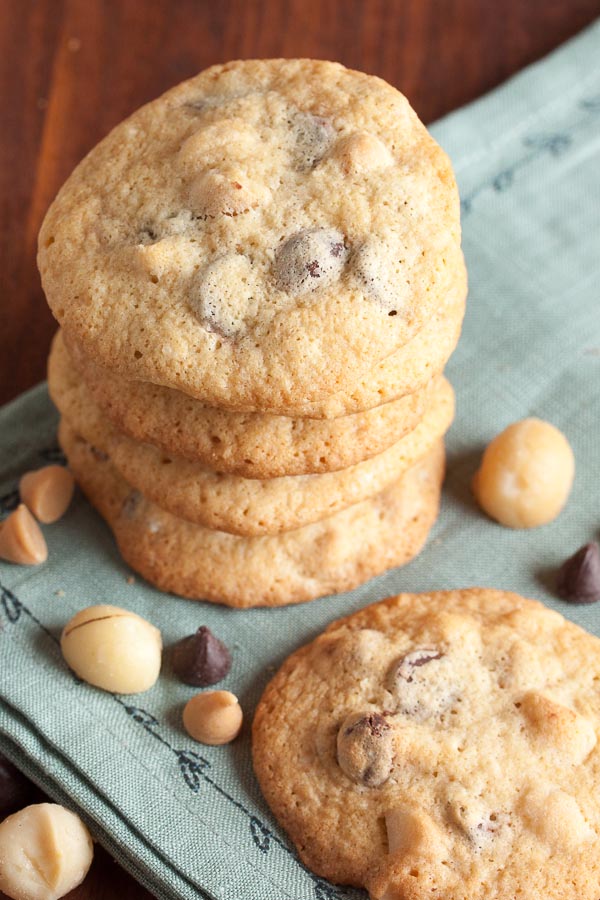
A friend asked me to combine her favorite flavors and make them into a cookie. She really liked them. I think I did good. Yeah I did.
- 2 teaspoons baking soda
- 2 teaspoons vanilla extract
- 2 teaspoons kosher salt
- 2 teaspoons almond extract
- 1 cup light brown sugar
- 4 large eggs room temperature
- 5 cups of all-purpose flour; dry measure
- 1 box of instant vanilla pudding 5.1 oz.
- 1 cups granulated sugar
- â½ cup dark brown sugar
- â¾ cup chopped nuts
- 2 teaspoons maple extract
- 2 teaspoons butternut flavoring
- 1 cups chopped macadamia nut
- 1 2/3 cups semi-sweet chocolate chips
- 12 oz. creamy peanut butter
- 4 sticks real butter softened to room temperature
- Carbohydrate 18.2913611173025 g
- Cholesterol 208.92 mg
- Fat 40.778711 g
- Fiber 1.68955557537079 g
- Protein 8.91360100000758 g
- Saturated Fat 20.7097707222222 g
- Serving Size 1 1 Serving (105g)
- Sodium 311.332595557323 mg
- Sugar 16.6018055419317 g
- Trans Fat 3.08106221111112 g
- Calories 456 calories
Step-by-step
- Preheat oven 340°F.; then whisk flour, salt, instant vanilla pudding, and baking soda together in a medium sized bowl; set aside.
- In a large mixing bowl, combine* peanut butter, butter, sugars, and all the flavorings together. Blend ingredients together to form a grainy paste. Add eggs one at a time; mixing after each addition. Blend until fluffy; remembering to scrape down sides of bowl with a rubber or metal spatula. Hand stir in macadamias and chocolate chips; adding in flour mixture and stirring until all flour is completely blended with grainy sugar paste.
- Place a sheet of parchment paper on an ungreased cookie sheet; using a 1-inch cookie scoop, drop dough on parchment paper and press down slightly to assist with spreading process.
- Bake for 7-12 minutes and remove from oven; allowing cookies to cool off. When cookies are settled; remove from cookie sheet to a cookie rack with a spatula.
- Cookies will be moist on top but slightly crisp around edges. Allow cookie sheet to cool before baking another batch. It makes about 10 dozen per batch.
What beverage cuts through forty grams of fat and multiple sugars without getting lost in the density of peanut butter and macadamia nuts? Pour a tall glass of cold whole milk, or brew a dark-roast chicory coffee that echoes the bitterness of semi-sweet chocolate chips. Because these baked rounds incorporate both light and dark brown sugars alongside instant vanilla pudding mix, their residual moisture remains remarkably high long after cooling. Matching this richness requires a drink with enough structural tannin or dairy fat to reset the palate between bites.
American bakers have combined peanut butter with chocolate chips since commercial peanut butter stabilization became widespread in the 1920s, gradually expanding the tradition to include regional nuts like macadamias. While traditionally dropped by a one-inch scoop onto parchment paper, this specific dough benefits from chilling for thirty minutes before baking at 340 degrees Fahrenheit. Solidified butter prevents excessive spreading, ensuring the center stays tender while the edges develop a proper crust. Controlling the oven temperature within that narrow seven to twelve minute window prevents the peanut solids from scorching prematurely.
Cost management matters when buying four sticks of butter, two kinds of extracts, and specialty nuts in a single trip. Purchasing bulk salted butter and substituting it for unsalted by reducing the kosher salt measurement by a quarter teaspoon per stick saves money without altering the final structure. Storing baked batches in an airtight container with a slice of sandwich bread transfers ambient moisture to the cookies, keeping them soft for up to five days. Freezing unbaked portions on a sheet pan allows individual portions to go straight from the freezer to the hot sheet pan whenever small quantities are needed.
Clean parchment paper on an ungreased aluminum sheet ensures even heat transfer without sticking or burning the bottoms of the cookies. Allow the metal baking pans to return to room temperature between rounds so the residual heat does not prematurely melt the fat in the next batch of dough. Proper cooling on wire racks stops the cooking process immediately, locking in the contrast between moist tops and crisp perimeters.


